 Bellingham Exterior
 Composite Decking Built for How Sunnyland Actually Weathers
Sunnyland homeowners deal with a specific combination of conditions that older or poorly-installed decks in this part of Bellingham never handle well for long: cool, moisture-laden air off Bellingham Bay, long stretches of driving rain through fall and winter, and shaded yards that stay damp enough to grow moss well into what should be a dry season. A deck built for a drier inland climate, or built without attention to drainage and airflow, tends to show its age fast here — soft spots, slick green film, fasteners that back out, and boards that cup or split.
Composite decking, installed correctly for this specific environment, holds up to that combination better than most alternatives without demanding constant upkeep. This page covers what a Sunnyland composite deck actually needs, what a correct installation involves, how we approach the work, and why local experience matters more than most homeowners expect when they start shopping for a contractor.
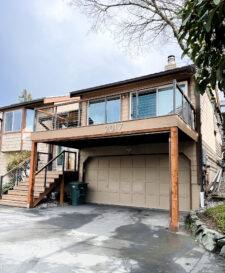
What Bellingham's Climate Actually Does to a Deck
Whatcom County's marine climate is mild compared to a lot of the country, but "mild" hides a lot of slow damage. Three things matter most for decking specifically:
Salt Air and Moisture
Proximity to Bellingham Bay means the air carries more salt and moisture than an inland location would. Over years, that moisture accelerates corrosion on any exposed metal fasteners, hardware, and hidden clips — which is why fastener choice and hardware quality matter more here than in a drier climate.
Driving Rain
Rain in this region doesn't just fall straight down — wind-driven rain gets pushed sideways into ledger connections, between boards, and under railings if flashing and gapping weren't done right the first time. A deck that looks fine in July can be trapping water against the house by November.
A Long Moss Season
Shaded lots, mature trees, and consistent dampness mean moss and algae have a long window to establish themselves — often longer than homeowners expect, since it doesn't fully stop even in drier summer stretches. Moss on a deck surface isn't just a cosmetic problem; it holds moisture against the board surface and turns into a slip hazard on stairs and walkways.
What a Correct Composite Deck Installation Involves
Composite boards themselves resist rot, but a composite deck is only as good as the structure underneath it and the details around the edges. A correct installation in this climate includes:
- Proper joist spacing and blocking — composite boards have manufacturer-specified span limits that are often tighter than dimensional lumber, especially at angles or picture-frame borders.
- Ledger flashing done right — the ledger board connection to the house is the single most common source of hidden water damage on any deck; correct flashing keeps driving rain from working its way behind the board and into the wall structure.
- Adequate under-deck ventilation and drainage slope — trapped moisture under a low deck or in a shaded corner is exactly what accelerates moss growth and slows drying between rain events.
- Corrosion-resistant fasteners and hardware — given the salt air near the bay, hardware rated for coastal or wet-climate exposure holds up longer than standard fasteners.
- Correct board gapping — composite boards expand and contract with temperature and moisture; gapping that ignores this leads to buckling or, on the other extreme, gaps wide enough to catch heels and debris.
- Attention to shaded, low-airflow zones — areas of a Sunnyland yard that stay damp longer need extra thought given to drainage and, where possible, board selection that resists surface growth.
Skipping any of these doesn't show up on day one. It shows up two or three winters later, which is exactly why the installation details matter more than the brand name on the board.
Composite vs. Other Decking Materials for This Climate
Every decking material involves trade-offs. Here's how composite compares to the other options homeowners in this area typically consider, specifically for a damp, moss-prone, salt-air environment:
| Material | Moisture & Moss Behavior | Maintenance Burden | Typical Lifespan Here |
|---|---|---|---|
| Composite (capped) | Resists rot and swelling; surface can still host moss/algae if not cleaned periodically | Low — periodic washing, no staining or sealing | 25-30+ years with correct install |
| Pressure-treated wood | Prone to swelling, splitting, and moss adhesion in shaded/damp spots | High — regular staining/sealing to slow moisture damage | 10-15 years before major repair or replacement |
| Cedar | Naturally more rot-resistant than treated pine but still absorbs moisture over time | Moderate to high — periodic sealing recommended | 15-20 years with upkeep |
| PVC/vinyl decking | Fully moisture-resistant surface, but can feel and flex differently underfoot; expansion behavior differs from wood-composite blends | Low | 25-30+ years |
We don't push one product line over another based on brand — we install composite decking as a professional standard for Sunnyland-area jobs because the moisture and maintenance trade-offs line up well with this climate, not because any alternative is a bad product. Wood decks aren't wrong; they just ask more of the homeowner in exactly the conditions this neighborhood produces.
Our Installation Process
The process is straightforward, but the order and attention to detail matter:
- On-site assessment — we look at drainage, sun/shade exposure, existing structure (if it's a rebuild), and any moss or moisture issues on the current deck or the area under a new build.
- Structural planning — joist layout, ledger connection points, and footing placement are planned around the manufacturer's span and fastening requirements for the specific composite board being used.
- Flashing and framing — ledger flashing, joist tape, and any necessary blocking go in before a single composite board is laid, since these are the parts that become invisible — and unfixable without demo — once the deck is finished.
- Board installation — correct gapping, fastening pattern, and picture-framing (if included) are set according to the board manufacturer's guidelines, not shortcuts.
- Railings, stairs, and trim — installed with the same corrosion-resistant hardware standard used throughout, since railings and stair stringers take the brunt of weather exposure.
- Final walkthrough — we go over drainage, any low spots, and basic care so the deck starts its life set up to shed water and resist moss buildup.
Living With Composite Decking in a Moss-Prone Climate
Composite decking is genuinely low-maintenance compared to wood, but "low-maintenance" doesn't mean "no maintenance" — especially in a yard that stays shaded and damp much of the year. A simple seasonal routine keeps a composite deck performing the way it's supposed to:
- Sweep debris (leaves, needles, seed pods) off the deck surface regularly — trapped organic material is what feeds moss and algae growth.
- Wash the surface once or twice a year with a mild soap-and-water scrub or a manufacturer-approved composite deck cleaner — avoid pressure washers on the highest settings, which can damage the board's protective cap layer.
- Check gaps between boards periodically for buildup of debris that can hold moisture against the board edges.
- Inspect railing posts and stair connections annually for any loosening, since these connection points see the most weather exposure.
- Keep nearby vegetation trimmed back where possible to improve airflow and sun exposure across shaded sections of the deck.
- Address standing water or slow-draining spots early — they're usually a sign of a slope or drainage issue rather than something that will resolve on its own.
Cost Factors for a Sunnyland Composite Deck
Every project is different, but the same handful of factors drive most of the cost difference between a straightforward composite deck and a more involved one:
| Factor | Why It Affects Cost |
|---|---|
| Deck size and shape | Square footage and the number of angles, curves, or picture-frame borders directly affect labor and material |
| Height and structure needed | A deck requiring footings, stairs, or a taller substructure needs more framing and engineering attention |
| Board tier chosen | Composite lines vary in cap technology, color/grain options, and warranty terms |
| Railing style | Composite, metal cable, or glass railing systems carry different material and installation costs |
| Site accessibility | Shaded, sloped, or hard-to-access Sunnyland lots can add time for material staging and equipment |
| Removal of an existing deck | Tear-off and disposal of an old wood deck adds labor before the new build even starts |
We'll walk through these factors specific to your property during an estimate rather than quoting off a generic price list — a shaded, sloped Sunnyland lot and a flat, open one aren't the same job even at the same square footage.
Why a Crew That Already Works Sunnyland Matters
Bellingham and Whatcom County's building code and permitting requirements apply to deck construction, and requirements around railing height, stair geometry, footing depth, and ledger attachment aren't optional details — they're inspected. A contractor who already works this area regularly knows what local inspectors look for and builds to that standard from the start, rather than treating it as an afterthought.
Just as important is familiarity with how individual neighborhoods behave. Sunnyland's mix of mature tree cover, sloped lots, and proximity to the bay means two decks a few blocks apart can have genuinely different drainage and moss exposure. A crew that's worked multiple projects in this specific area brings that pattern recognition to your job instead of learning it at your expense.
Get a Straightforward Estimate
If you're planning a new composite deck or replacing one that's struggled with moisture, moss, or general wear, we're happy to take a look and walk you through what your specific property needs — no pressure, no inflated scope. Use the form below to request a free estimate, and we'll go over the details in plain terms.