 Bellingham Exterior
 Fairhaven's Windows Face a Different Set of Problems
Fairhaven is one of the older, more character-rich pockets of Bellingham, and its housing stock reflects that — a mix of early-1900s homes with original wood windows, mid-century aluminum replacements bolted in decades ago, and newer infill that's still only a window generation or two old. Whatever era a given home falls into, its windows are doing the same job in the same environment: sitting close to Bellingham Bay, taking on salt-laden air, absorbing driving rain off the water, and sitting damp for months at a stretch during the region's long moss season.
That combination is harder on windows than most inland Whatcom County locations. Salt air speeds up corrosion on hardware, fasteners, and lower-grade metal components. Wind-driven rain finds any weakness in flashing or sealant and pushes water sideways, not just down. And the extended wet season means a small gap or failed seal doesn't just get wet once — it stays wet, which is exactly the condition that rots wood trim and breeds the moss and mildew you see creeping up siding and window sills around the neighborhood. Window replacement in Fairhaven isn't just about swapping old glass for new; it's about correcting the moisture path around the opening so the new window actually holds up here.
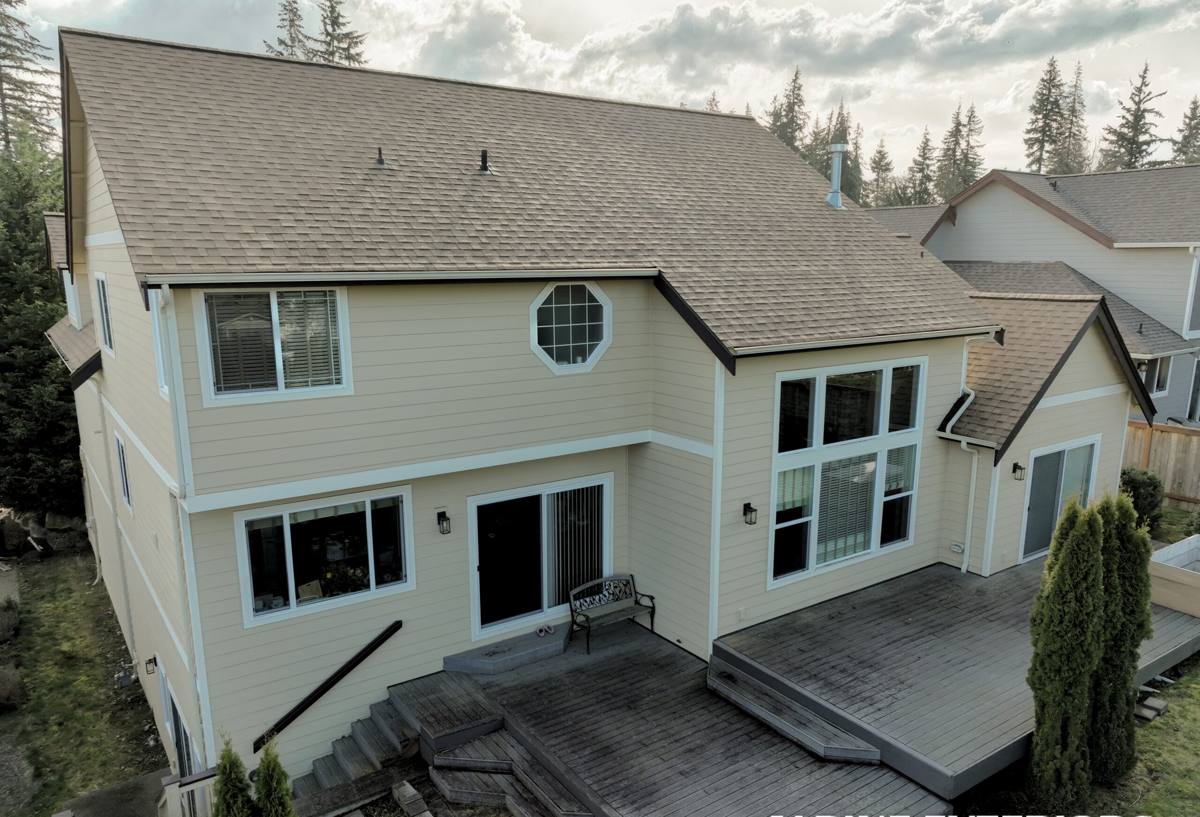
What Bellingham's Coastal Climate Does to Windows Over Time
Understanding the failure pattern helps explain why the fix matters. In this climate, window problems usually show up in a predictable order:
- Seal failure first: insulated glass units lose their seal, and you start seeing fog or condensation between the panes, especially on bay-facing rooms.
- Hardware corrosion: locks, cranks, and hinges — particularly on older aluminum or lower-grade vinyl units — get stiff or seize up from salt exposure.
- Wood rot at the sill and jamb: once water gets behind the frame, it has nowhere to dry out during our wet months, and rot spreads into the surrounding trim and sheathing.
- Drafts and energy loss: warped frames and failed weatherstripping let conditioned air out and cold, damp air in — a common complaint in older Fairhaven homes during winter storms.
By the time a homeowner notices drafts or fogged glass, the moisture damage is often already underway behind the trim. That's the main reason we look past the glass itself and pay close attention to what's happening at the opening.
Full-Frame vs. Insert Replacement: Which Fits Fairhaven's Older Openings
One of the first decisions on any Fairhaven project is whether a window gets an insert replacement (new window installed into the existing, intact frame) or a full-frame replacement (the old frame comes out entirely, down to the rough opening). This isn't a one-size answer — it depends on the condition of what's already there, which is why an honest inspection has to come before a quote.
| Factor | Insert Replacement | Full-Frame Replacement |
|---|---|---|
| Best for | Sound existing frame, no rot, no settling issues | Rotted sill/jamb, water damage, or an out-of-square opening |
| Access to flashing | Limited — relies on the old flashing still being sound | Full access to re-flash and reset moisture barriers correctly |
| Typical timeline | Faster, less exterior disruption | Longer, more involved around siding and trim |
| Common in Fairhaven on | Newer or well-maintained openings | Original early-1900s window openings with visible rot or old repairs |
| Long-term risk if misapplied | Traps existing moisture problems behind new glass | Not usually needed on sound, dry openings — added cost with little benefit |
Given how much of Fairhaven's housing stock predates modern building practices, we see a real mix of both on the same street — sometimes on the same house. Choosing wrong in either direction either wastes money or seals a moisture problem behind brand-new trim, which is worse than doing nothing.
Reading the Opening Before Recommending Anything
Before we recommend one approach over the other, we check the sill for soft spots, probe the jambs, and look at how the current window has been performing — fogging, drafts, paint failure, and staining all tell part of the story. On a coastal property like this, we also factor in exposure: a window facing the bay and prevailing weather typically takes more punishment than one tucked on a sheltered side of the house, and that can affect both the material choice and how aggressively we address flashing.
Choosing the Right Frame Material and Glass for This Climate
Frame material matters more here than it would in a drier, inland part of Whatcom County. Salt air and near-constant humidity swings rule out some choices and favor others.
- Vinyl: Good moisture resistance and low maintenance, a common and reasonable choice for most Fairhaven homes; quality varies significantly between manufacturers, so we're selective about which lines we install.
- Fiberglass: Handles temperature swings and moisture with very little expansion or contraction, which suits coastal exposure well; typically a step up in cost.
- Wood and wood-clad: Often the right call when matching the historic look of an original Fairhaven home matters most, but wood demands real maintenance discipline in this climate — we're upfront with homeowners about that trade-off rather than overselling it.
- Bare aluminum: We generally steer homeowners away from uncoated aluminum frames in this specific environment. It conducts cold, condenses easily, and its lower-grade hardware corrodes faster under salt exposure than vinyl or fiberglass — a maintenance burden we'd rather flag up front than let a homeowner discover in year three.
On glass, a double-pane unit with a low-E coating and inert gas fill (argon is standard) is the baseline we recommend almost everywhere in this climate. It cuts condensation risk on cold, damp mornings — a real issue on bay-facing glass — and improves comfort without requiring exotic upgrades. For rooms that take direct afternoon sun, a slightly different low-E coating can also help manage heat gain, which we'll flag case by case rather than applying blanket recommendations.
Keeping Fairhaven's Character Intact
Fairhaven's appeal is tied to its historic feel, and a lot of homeowners here want better-performing windows without the house looking like it got a generic vinyl upgrade. That's achievable, but it takes some intention:
- Matching grid patterns (true divided light or simulated) to the home's original window style instead of defaulting to plain sightlines.
- Selecting exterior trim and frame profiles that echo the depth and shadow lines of older wood windows rather than a flat modern look.
- Matching sash proportions on multi-pane or double-hung units so the new windows read consistently with the rest of the block, not just the one house.
- Choosing exterior colors and finishes that hold up to salt air without fading or chalking early — a real issue with lower-grade finishes on this coastline.
If a property falls within any zone with exterior alteration review, we'll flag that early so there are no surprises mid-project — better to confirm what's allowed before ordering windows than after.
What a Correct Installation Actually Involves
The window itself is only part of the job. Most of the failures we get called out to inspect on older coastal homes trace back to flashing and sealing done wrong the first time, not to the window product itself. A correct installation, especially in a climate with this much wind-driven rain, includes:
- Removing the old unit carefully and inspecting the full opening — sill, jambs, header, and surrounding sheathing — for hidden rot or prior water damage.
- Repairing or rebuilding any damaged framing before the new window goes in; installing into a compromised opening just hides the problem.
- Installing a proper weather-resistive barrier and flashing sequence, lapped correctly so water sheds outward and down, never behind the barrier.
- Setting the window level, plumb, and square, with correct shimming so it operates smoothly and doesn't stress the seal over time.
- Sealing and insulating the gap around the frame with the right materials — not just caulk over gaps, which fails first in this climate.
- Finishing exterior trim and touch-up so the water management system is fully closed up before the next rain.
Skipping or rushing any one of these steps is how a homeowner ends up with a nice-looking window that's fogging or leaking again within a few wet seasons.
Our Process, Start to Finish
For a Fairhaven project, our process generally looks like this:
- On-site assessment: we walk the exterior and interior, check existing windows for signs of the failure patterns above, and note exposure differences around the house.
- Honest scoping: we tell you plainly whether a given window is a candidate for insert replacement or needs a full-frame approach, and why.
- Product selection: we walk through frame material, glass package, and appearance options based on your budget and how much historic matching matters to you.
- Written estimate: clear pricing, materials, and timeline before any work starts.
- Removal and prep: careful tear-out, opening inspection, and any needed framing repair.
- Installation: correct flashing, sealing, and setting of the new window per the steps above.
- Final walkthrough: we test operation, check seals, and confirm the finished look with you before we call it done.
Signs Your Fairhaven Home's Windows Need Attention
You don't need to wait for a window to fail completely before looking into replacement. Common signs we hear about from homeowners in this neighborhood:
- Fogging or moisture trapped between panes, especially on rooms facing the water or prevailing weather.
- Noticeable drafts during windstorms, even with the window fully latched.
- Soft, spongy, or visibly rotted wood at the sill or lower frame.
- Paint that keeps failing in the same spot no matter how often it's touched up.
- Windows that are hard to open, close, or lock — often a sign of frame warping or corroded hardware.
- Visible moss, mildew, or dark staining building up on or around the frame year over year.
- Noticeably higher heating bills in winter with no other explanation.
Any one of these on its own might not mean urgent replacement, but a few together usually mean the window's moisture and thermal barrier has broken down.
Why It Matters to Hire a Crew That Already Works in Fairhaven
Window replacement done by someone unfamiliar with this specific stretch of coastline tends to treat every job the same — same flashing detail, same product recommendation, regardless of exposure. A crew that regularly works Fairhaven and the surrounding Bellingham waterfront knows which sides of a house typically take the worst weather, which construction eras in this neighborhood tend to hide rot in predictable places, and how to balance historic appearance with real performance upgrades. That local pattern recognition shortens the guesswork and reduces the chance of a callback for a problem that should've been caught during the initial inspection.
It also means someone who's available and accountable after the job is done — not a crew that installed once in the area and moved on. In a climate where a small installation shortcut can take a full wet season to show up as a leak, that kind of follow-through matters.
If you're weighing window replacement for a Fairhaven home, we're happy to take a look and give you a straight assessment — no pressure, no upsell, just what your windows actually need. Reach out using the form below to set up a free estimate.