 Bellingham Exterior
 Why Siding Choice Matters More in York Than It Does Inland
Homes in York sit close enough to the water and the weather patterns coming off Bellingham Bay that siding takes a different kind of beating than it would twenty miles inland. Salt-laden air accelerates corrosion on fasteners and trim, driving rain pushes moisture sideways into seams and laps that would stay dry in a gentler climate, and the long, damp shoulder seasons in Whatcom County give moss and algae months at a time to establish themselves on north-facing walls and anything shaded by mature trees. None of this is dramatic on its own, but stacked together over years, it's exactly the kind of slow, cumulative exposure that separates siding systems that hold up from ones that don't.
That's the lens we use when we talk to York homeowners about siding: not "what looks good on day one," but "what still looks and performs the way it should after fifteen winters of this." James Hardie fiber cement is the only product we install, and on a house in this part of Bellingham, the reasons are practical, not theoretical.
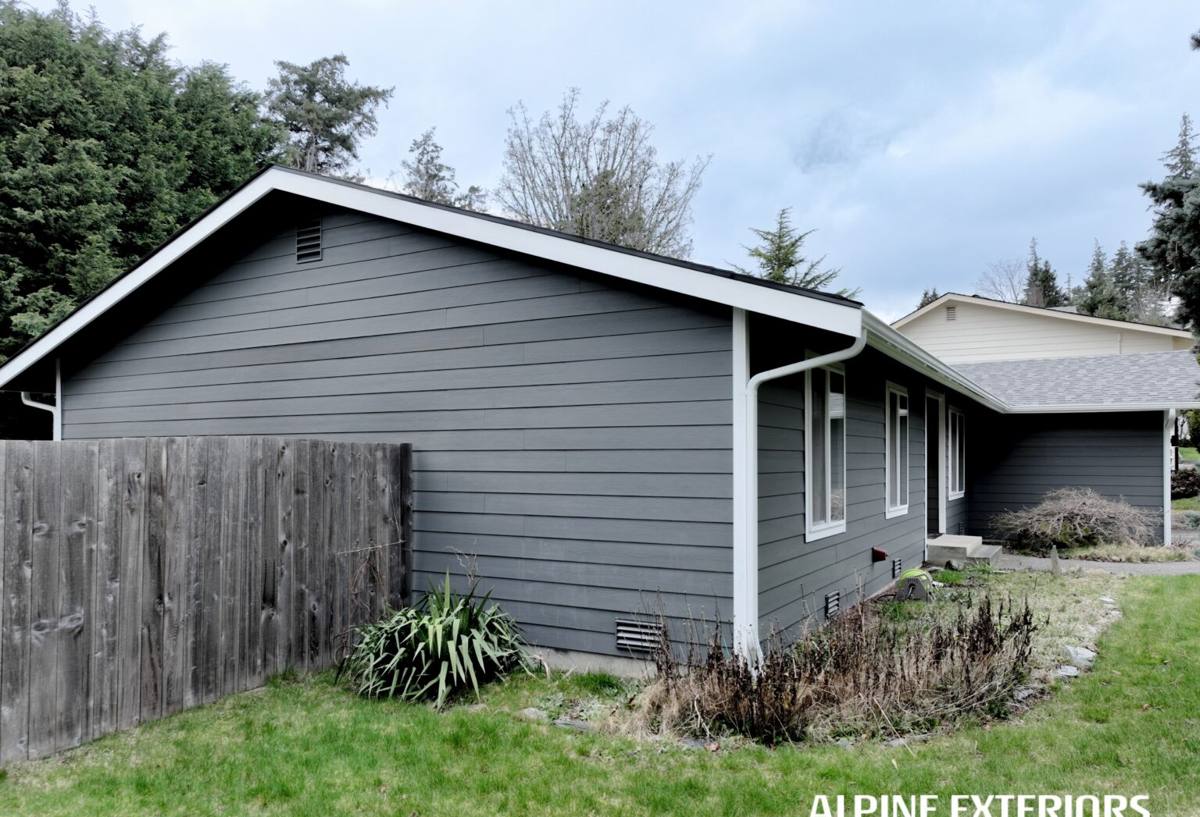
What This Climate Actually Does to a Wall
Salt Air and Driving Rain
Proximity to salt water means airborne salt settles on every exterior surface, including siding, trim, and fasteners. Combined with wind-driven rain that doesn't fall straight down but gets forced under laps and around corners, this is a moisture-and-corrosion combination that punishes materials with any tendency to swell, delaminate, or corrode at the fastener line. Correctly installed fiber cement doesn't swell with moisture the way wood-based products can, and the fastening hardware we use is chosen with that salt exposure in mind.
The Long Moss Season
Whatcom County's mild, wet winters and shoulder seasons are ideal for moss and algae growth on shaded or north-facing siding. Moss itself doesn't destroy fiber cement the way it can degrade wood, but moss holding moisture against any siding system for months at a time is still a maintenance factor worth planning around — through material choice, paint quality, and basic upkeep like keeping vegetation trimmed back from walls.
Why James Hardie Fits a York House
James Hardie fiber cement is engineered specifically for climate zones like ours. The HZ5 product line, built for the Pacific Northwest and similar wet, temperate regions, is formulated and tested for moisture exposure, freeze-thaw cycling, and long-term dimensional stability — it doesn't expand and contract with humidity swings the way wood and some composite products do, and it's non-combustible, which matters given the wildfire smoke and drought stress the broader region has seen in recent summers even though our direct wildfire risk is lower than east of the Cascades.
ColorPlus Factory Finish
Most of the failures we see on older siding jobs trace back to the paint, not the substrate — field-applied paint on any siding material is only as good as the prep, the weather on installation day, and the specific coating used. James Hardie's ColorPlus finish is baked on in a controlled factory environment before the boards ever reach a jobsite, giving a more consistent, UV- and fade-resistant finish than field painting, with a warranty that covers the finish itself, not just the board underneath.
What a Correct Installation Actually Involves
Fiber cement siding is only as good as the installation behind it. James Hardie publishes detailed installation specifications, and following them — not shortcutting them — is what determines whether a job performs for decades or starts showing problems in five years.
Clearances and Water Management
Every piece needs proper clearance from grade, roof lines, decks, and other siding transitions so water has somewhere to go instead of wicking into the board or the wall assembly behind it. Flashing at windows, doors, and any horizontal transition has to be integrated correctly with the house wrap, not just caulked over as an afterthought — caulk is a backup, not a substitute for proper flashing sequence.
Fastening and Joints
Fasteners need to be the right type, driven to the right depth, and placed at the right spacing — over-driven or under-driven nails are one of the most common causes of premature siding failure. Butt joints and seams need to be treated correctly, whether that means sealed, flashed, or hidden behind trim, so that the driving rain this area gets doesn't find a path in.
Our Process for a York Project
We start with an on-site look at the specific exposure your home deals with — which walls take the most weather, where moss or moisture staining is already showing, and what's going on with the sheathing and house wrap underneath the current siding, since that's often where the real story is. From there:
- Written estimate covering material, labor, tear-off, disposal, and any repair work the substrate needs before new siding goes on
- Removal of old siding and inspection of sheathing, flashing, and house wrap, with any rot or damage addressed before covering it back up
- Installation following James Hardie's published specifications for clearances, fastening, and flashing integration
- Trim, caulking, and finish work at windows, corners, and transitions
- Final walkthrough and cleanup
We don't cover up bad sheathing or skip flashing details to save an hour on a job — in a climate like this, those shortcuts show up as callbacks within a few winters.
Choosing a Product Line and Color
James Hardie makes several plank profiles and panel systems, and the right one depends on your home's existing style and how much of the original look you want to preserve versus update.
| Product | Best Use | Notes for This Climate |
|---|---|---|
| HardiePlank Lap Siding | Traditional horizontal lap look | Most common choice; HZ5 formulation for PNW moisture and freeze-thaw exposure |
| HardiePanel Vertical Siding | Board-and-batten or modern accents | Good for gables and accent walls; fewer horizontal laps for water to find |
| HardieTrim | Corners, fascia, window and door trim | Matches the fiber cement system so trim and field siding age the same way |
| HardieShingle | Shingle-style accent areas | Decorative use on gables or dormers rather than full-wall coverage |
ColorPlus comes in a range of factory colors designed to hold up to UV and coastal exposure without fading the way field-applied paint often does within a few years. We'll walk through samples in person, since color reads differently under Bellingham's overcast light than it does on a screen or a small chip.
What Affects Cost on a Job Like This
Every home is different, but the same handful of factors drive most of the variation we see in estimates:
| Factor | Why It Matters |
|---|---|
| Tear-off and sheathing condition | Hidden rot or damaged sheathing found during tear-off adds repair scope before new siding can go on |
| Home size and wall complexity | More corners, gables, and trim transitions mean more labor and cut waste |
| Product line and profile | Plank width, panel systems, and accent shingle work price differently than a straightforward lap job |
| Color and finish | Standard ColorPlus colors versus premium or custom finishes affect material cost |
| Site access | Steep lots, tight side yards, or limited staging space affect labor time |
We give a firm, itemized estimate before any work starts so there are no surprises mid-project — and if tear-off reveals something unexpected, we stop and talk to you before proceeding, not after.
Maintaining Hardie Siding in This Climate
Fiber cement is genuinely low-maintenance compared to wood, but "low-maintenance" isn't "no-maintenance," especially with the moss exposure common in this area. A short annual routine keeps a correctly installed system performing for the long haul:
- Rinse siding annually with a garden hose and soft brush attachment — avoid high-pressure washing, which can force water behind laps
- Trim back shrubs, trees, and vines so foliage isn't holding moisture against the wall or shading it into permanent dampness
- Check caulking at windows, doors, and trim joints yearly and touch up before gaps open up
- Address moss or algae growth promptly on shaded or north-facing walls with a gentle cleaning approach rather than letting it build up over multiple seasons
- Walk the exterior after major windstorms to check for any loosened trim, fasteners, or flashing
Why Local Experience in York Matters
Installation specs are the same on paper everywhere, but knowing which walls in a given neighborhood take the worst of the wind-driven rain, which lots hold onto moss longest, and how the salt exposure varies block to block is something you only pick up by working here regularly. A crew that already does jobs across Bellingham and Whatcom County isn't guessing at how to detail a York home for this climate — they've already seen what happens when it's done right and what happens when it isn't.
If you're considering a siding replacement or want an honest read on what your current siding is telling you, we're happy to take a look. The estimate is free, there's no pressure, and you'll get a straight answer about what your home actually needs — just fill out the form below.