 Bellingham Exterior
 Edgemoor's Roofs Work Harder Than Most
Edgemoor sits close enough to Bellingham Bay that salt-laden air is a daily fact of life, and close enough to mature fir and cedar cover that shade, needle drop, and moisture retention are just as constant. Add Whatcom County's long, wet winters and the kind of driving, wind-pushed rain that comes off the water sideways rather than straight down, and you have a roofing environment that punishes shortcuts. A roof that would coast along fine in a drier, more open part of the county can develop real problems here years ahead of schedule if it wasn't installed or maintained with this specific climate in mind.
We work on homes in this neighborhood regularly, which matters more than it might sound. A roof repair crew that mostly works inland, sunnier areas will diagnose an Edgemoor roof differently than one that already knows what tree cover and marine air do to shingles, flashing, and fasteners over time. This page is about roof repair specifically — not full replacement, not general exterior work — for homes in this part of Bellingham.
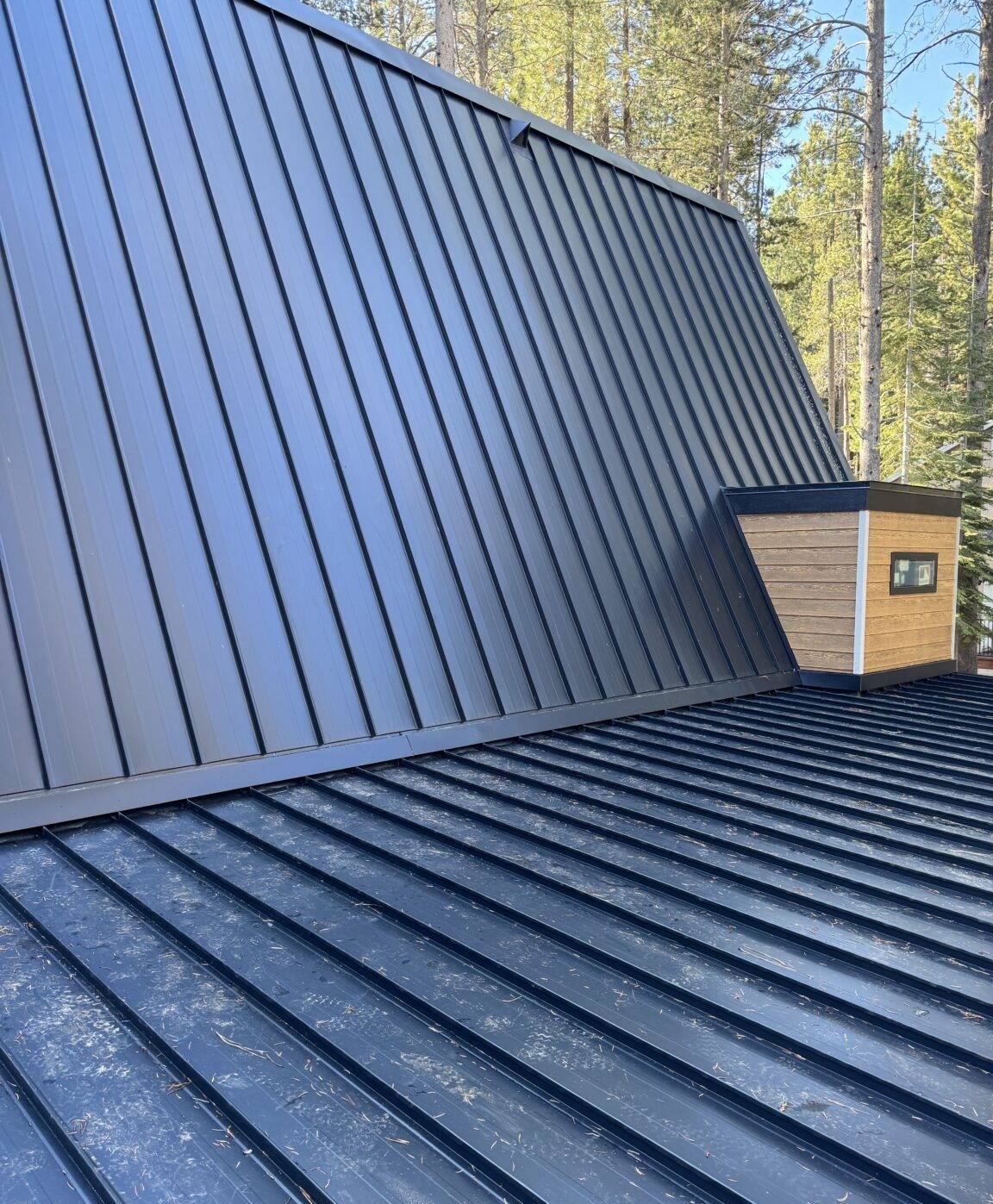
What Salt Air, Rain, and Moss Actually Do to a Roof
Salt Air and Metal Fatigue
Airborne salt accelerates corrosion on anything metal on your roof: flashing, drip edge, nail heads, vent boots with metal collars, and gutter hardware. Corroded flashing is one of the most common sources of hidden leaks we find on Edgemoor homes, because the shingles above it can look perfectly intact while the metal underneath has quietly failed. This is a slower process than storm damage, which is exactly why it's easy to miss during a quick visual check from the ground.
Moss, Not Just an Appearance Problem
Whatcom County's long wet season and the shade from mature trees give moss everything it needs to establish itself on a roof, especially on north-facing slopes or areas that stay damp longer after a storm. Moss isn't just cosmetic. As it grows, it lifts shingle edges, holds moisture against the roofing material instead of letting it shed, and works its root structure into the granule surface. Over a few seasons, that translates into accelerated granule loss, softened decking underneath, and entry points for water where none existed before.
Driving Rain and Wind-Driven Water
Rain that comes in at an angle behaves differently than straight-down rain. It can push under shingle tabs, work its way past poorly lapped flashing, and find gaps around chimneys, skylights, and roof-to-wall transitions that would stay dry in calmer weather. Homes in Edgemoor with any exposure toward the water tend to see this more than homes tucked into more sheltered parts of Bellingham.
Signs an Edgemoor Roof Needs Repair, Not Just a Wash
Homeowners often assume moss and staining just call for a cleaning. Sometimes that's true. Other times it's a sign that repair work is already overdue. Here's what we look for, and what you can check yourself before calling anyone:
- Moss growth thick enough to see a raised, cushiony texture rather than just green discoloration
- Granules collecting in gutters or at downspout outlets after normal rain, not just after a storm
- Dark streaking that doesn't wash off, which can indicate algae working into a compromised surface
- Soft or spongy spots when walking the roof, especially near valleys or chimney bases
- Rust staining running down from flashing, vent stacks, or metal fasteners
- Curling, cracking, or lifted shingle tabs, particularly on slopes that get the most shade
- Any water staining on interior ceilings, even faint or old-looking, since it rarely resolves on its own
- Visible gaps or separation where flashing meets a chimney, skylight, or dormer
If you're seeing more than one or two of these, it's worth having someone look at the roof directly rather than guessing from the ground.
What a Correct Repair Actually Involves
A proper roof repair isn't just patching the spot that's visibly failing. It means finding out why that spot failed in the first place, since in a climate like this, the visible symptom and the actual cause are often in different locations. Water travels along the underside of decking before it shows up as a stain or a soft spot, so a repair that only addresses the obvious leak point can leave the real problem in place.
Our approach on Edgemoor homes starts with tracing the water path, not just covering the hole. That means checking flashing integrity around every penetration — chimneys, vents, skylights — inspecting the decking for soft spots beyond the immediate repair area, and looking at whether moss or debris buildup elsewhere on the roof is contributing to the problem. A repair that ignores the moss causing the moisture retention, for example, is a repair that will need to be redone.
Matching Materials, Not Just Covering Gaps
Shingle color and profile change across manufacturing runs and product lines. When we replace a section, we try to match as closely as the market allows, and we're upfront when an exact match isn't possible — better to tell you honestly than to promise a seamless blend we can't deliver. For flashing and fasteners, we use corrosion-resistant materials suited to this air quality, not whatever is cheapest at the yard.
Repair vs. Replacement: Making the Right Call
Not every roof with moss and a leak needs to come off. But some do, and a contractor who only offers one answer regardless of what they find isn't giving you an honest assessment. Here's roughly how we think through it:
| Factor | Repair Usually Makes Sense | Replacement Should Be Considered |
|---|---|---|
| Roof age | Under roughly 15-18 years, depending on material | Nearing or past manufacturer's expected service life |
| Extent of moss/moisture damage | Isolated to one or two areas | Widespread across multiple slopes |
| Decking condition | Solid, no soft spots found | Soft or delaminating decking in several spots |
| Number of prior repairs | First or second repair in this area | Same area repaired multiple times already |
| Flashing condition overall | Localized corrosion or gaps | Widespread corrosion across most penetrations |
This table is a general guide, not a diagnosis. The only way to know which column your roof falls into is a direct inspection, which is exactly what we do before recommending anything.
Our Repair Process
We keep this straightforward because homeowners deserve to know what's actually happening on their roof, not a vague summary after the fact.
- Inspection. We walk the roof directly rather than relying on ground-level or drone photos alone, checking decking firmness, flashing condition, and moss extent.
- Honest assessment. We explain what we found, what's causing it, and whether repair is the right call or whether replacement should be on the table.
- Scoped repair plan. We identify exactly which materials need replacing, including flashing and decking if it's compromised, not just the visible shingle damage.
- The repair itself. Removal of affected material, decking replacement where needed, correct flashing installation, and shingle replacement matched as closely as possible.
- Moss and debris clearing. Where moss contributed to the problem, we clear it from the repaired area and surrounding roof so it isn't immediately undoing the work.
- Cleanup and walkthrough. We clear debris from gutters and the property, then walk you through what was done.
Underlayment and Flashing Choices That Matter Here
In a marine climate with heavy moss pressure, the materials underneath the visible shingle layer matter as much as the shingles themselves. We favor synthetic or high-quality underlayment over older felt products in repair areas because it holds up better to the moisture cycling common in Bellingham's climate — repeated wetting and drying rather than one dry season. For flashing, we use materials chosen for corrosion resistance given the salt air exposure, rather than defaulting to whatever is standard in drier regions. We're happy to walk through the specific products we'd use for your roof and why, including the trade-offs of each, before any work starts.
Why Local Experience in Edgemoor Actually Matters
Roofing problems in this neighborhood follow patterns that aren't identical to roofing problems elsewhere in Whatcom County. The combination of tree cover, proximity to the bay, and the specific way driving rain hits certain home orientations means a crew that already understands these patterns spends less time guessing and more time getting the diagnosis right the first visit. It also means we're not learning on your roof — we've already seen what moss does to a north-facing slope shaded by conifers, and what salt air does to flashing over a decade of exposure.
That experience also shapes how we set expectations. We won't tell you a roof needs full replacement when a targeted repair will hold up, and we won't undersell a repair when the underlying decking is already compromised. Both directions of honesty matter, and both come easier when you've done this work in this specific neighborhood before.
Maintenance That Extends the Life of a Repair
A correct repair should last, but a few habits help it last longer in this climate:
- Keep gutters clear so water isn't backing up under roof edges during heavy rain
- Have moss growth addressed before it becomes thick enough to lift shingle edges
- Trim back overhanging branches where reasonable to reduce shade and debris buildup
- Schedule a roof check after any significant windstorm, even if nothing looks obviously wrong
None of this is complicated, but it's the difference between a repair that holds for its full expected life and one that starts showing the same problems again in a few years.
If you're seeing moss buildup, staining, or a leak on your Edgemoor home, we're glad to take a direct look and give you an honest read on what's going on — no pressure, no upsell to a full replacement you don't need. Use the form below to request a free estimate.