 Bellingham Exterior
 Puget's Climate Puts Siding to the Test
Homes in the Puget area near Bellingham sit close enough to the water that salt-laden air is a constant, low-grade stress on every exterior surface. Add Whatcom County's long wet season — months of driving rain pushed sideways by wind off the Sound — and siding here works harder than siding almost anywhere else in the state. Between the rain and the shade thrown by mature evergreens common in this part of the county, moss and algae get a long runway to establish themselves on north- and west-facing walls.
None of this is dramatic on its own. It's the combination, repeated year after year, that separates siding systems that hold up from ones that quietly fail behind a coat of paint. Salt air accelerates corrosion on fasteners and trim. Driving rain finds every gap in flashing and caulk. Moss holds moisture against the wall long after a storm has passed. A siding product and installation that don't account for all three at once will eventually show it — usually as soft spots, staining, or paint failure well before the siding is due for replacement.
Why James Hardie Fiber Cement Is the Right Fit Here
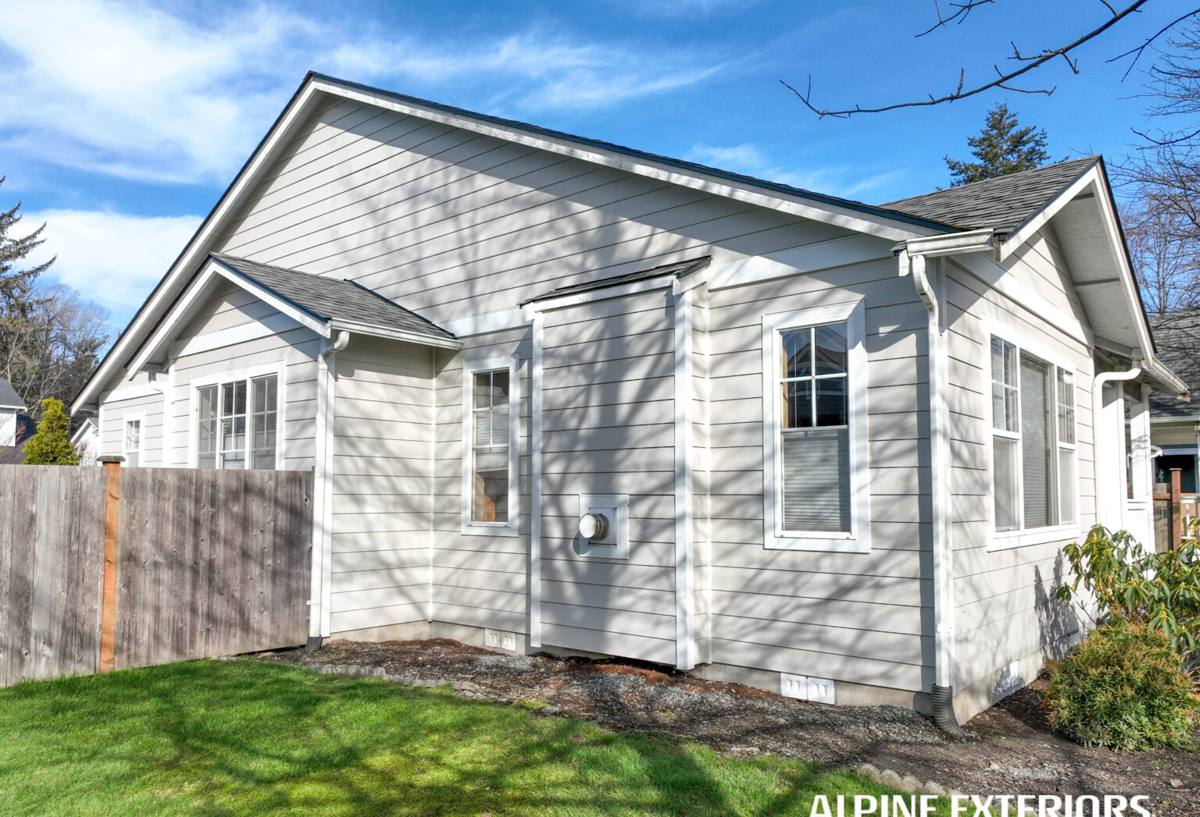
We install James Hardie fiber cement exclusively, and Puget's climate is a big part of why. Fiber cement is a blend of cement, sand, and cellulose fiber pressed into dense, dimensionally stable boards. It doesn't absorb water the way wood-based products do, it doesn't warp or delaminate under repeated wet-dry cycles, and it's non-combustible — a real consideration given how dry Whatcom County summers have trended in recent years even between wet winters.
Hardie's HZ5 product line is engineered specifically for climates that see a lot of moisture cycling, which describes this stretch of the Puget Sound corridor well. The factory-applied ColorPlus finish is baked on under controlled conditions rather than field-sprayed, so the color layer resists the fading and chalking that salt air and UV exposure cause on site-painted siding. That finish is also what keeps moss and algae from getting a foothold as easily — a smooth, consistent factory finish sheds water and gives organic growth less to grip onto than a porous or unevenly painted surface.
What a Correct Installation Involves
Fiber cement siding is only as good as the water management system behind it. Most siding failures we're called to diagnose in this area aren't a problem with the board itself — they're a flashing detail, a fastening mistake, or a caulk joint that was never supposed to be there in the first place.
Water Management and Flashing
Every horizontal surface — window heads, door tops, trim, the transition between wall and foundation — needs proper flashing that directs water out and away from the wall assembly, not caulk applied as a substitute for it. Behind the siding, a code-compliant weather-resistant barrier and rainscreen gap matter as much as the siding itself, especially on a wall that's going to see driving, wind-blown rain regularly.
Fastening and Clearances
Hardie specifies fastener type, spacing, and penetration depth for a reason — under- or over-driven nails compromise the board's ability to move slightly with temperature and humidity changes without cracking. Ground clearance and clearance from roof lines, decks, and other siding also need to be maintained to keep the bottom edge of the siding from sitting in standing water or trapped moisture.
Caulking and Paint Lines
Joints should be caulked with a high-quality, paintable, flexible sealant only where Hardie's install specs call for it — not everywhere, since over-caulking can trap moisture instead of shedding it. Cut edges and any field-cut ends need to be sealed and touched up with Hardie-approved products to protect the exposed core from moisture intrusion.
James Hardie Product Lines for Puget Homes
Different parts of a home benefit from different Hardie profiles. Here's how the main options compare for a coastal Whatcom County property:
| Product | Best Use | Why It Fits Puget's Climate |
|---|---|---|
| HardiePlank Lap Siding | Primary wall coverage | Classic horizontal lap profile sheds driving rain efficiently; available in smooth or cedar-textured finish |
| HardieShingle | Accent gables, dormers | Staggered or straight-edge shingle look without the moisture uptake of real cedar shingles |
| HardiePanel | Modern vertical sections, garages | Clean vertical lines shed water fast; pairs well with board-and-batten detailing |
| HardieTrim | Corners, window and door surrounds | Stays dimensionally stable next to flashing details, reducing gaps where water can enter |
Why We Don't Install Vinyl or LP SmartSide Here
We get asked about vinyl and engineered wood siding often enough that it's worth addressing directly. Vinyl is inexpensive and low-maintenance in mild climates, but it's a thin plastic product that expands and contracts significantly with temperature swings, can crack in cold snaps, and tends to fade and become brittle under years of UV and salt air exposure — problems that show up faster on a home this close to open water. LP SmartSide is a wood-strand product, and any wood-based siding is more sensitive to sustained moisture exposure than cement-based siding, which matters in a county that sees this much rain and this many wet, shaded wall sections.
Both are legitimate products used successfully in plenty of climates. We simply made a call, as a company, to standardize on the one system whose moisture behavior, fire resistance, and long-term finish durability best match what this specific stretch of the Puget Sound region puts homes through. That's the whole reason behind the recommendation — not that the alternatives are bad products everywhere, just that they're not the right match for the conditions here.
Our Process, Start to Finish
- On-site assessment. We walk the exterior, check for existing moisture damage, moss buildup, and problem areas around windows, trim, and roof lines.
- Detailed proposal. You get a written scope covering product lines, colors, trim details, and what's included — no vague allowances.
- Tear-off and inspection. Old siding comes off and the sheathing underneath gets inspected for rot or damage before anything new goes up.
- Water management first. Weather-resistant barrier, flashing, and rainscreen components go in before a single piece of Hardie siding is installed.
- Installation to spec. Fastening, clearances, and caulking follow James Hardie's published installation guidelines, not shortcuts.
- Final walkthrough. We go over the finished job with you before calling it done.
What Fiber Cement Siding Costs — And What Drives the Range
Every home is different, but the factors that move the price on a Puget-area project are fairly consistent:
| Factor | Why It Matters |
|---|---|
| Home size and wall complexity | More corners, gables, and dormers mean more cutting, trim work, and labor hours |
| Existing siding removal | Tear-off and disposal of old siding, and any sheathing repair it uncovers, adds time and cost |
| Product mix | Combining lap siding with shingle accents or panel sections costs more than a single uniform product |
| Color and finish | Factory ColorPlus finishes cost more upfront than primed siding but eliminate a full site-painting job |
| Access and site conditions | Steep lots, limited staging area, or multi-story walls affect labor and equipment needs |
We'll walk your specific home and give you real numbers rather than a broad estimate that doesn't reflect your property.
Living With Fiber Cement in a Moss Season
Even the right product benefits from a bit of homeowner attention, especially on shaded or north-facing walls where moss has the best conditions to take hold. A little routine care goes a long way toward keeping a Hardie installation looking like it did on day one:
- Rinse siding gently once or twice a year, focusing on shaded walls and areas under overhanging branches
- Trim back vegetation and tree limbs that keep siding sections damp and shaded longer than the rest of the house
- Check gutters and downspouts each fall so overflow isn't running down the wall face during winter storms
- Watch caulk joints around windows and trim for cracking or separation and have them touched up before a wet season sets in
- Address any moss or algae buildup early with a gentle wash rather than pressure-washing, which can force water behind the siding
Why Local Puget Experience Matters
A siding crew that's worked this specific pocket of Whatcom County knows which wall orientations catch the worst of the wind-driven rain, which lots hold onto shade and moisture the longest, and how the salt air off the Sound tends to age different finishes over time. That local pattern recognition shapes real decisions — where to add extra flashing attention, which trim details are worth upgrading, how a color will actually look and hold up on this side of the county rather than somewhere inland.
If your Puget-area home needs new siding, or you're planning ahead for a project down the road, we're happy to take a look and talk through what correct fiber cement installation would involve on your specific house. Use the form below to request a free, no-pressure estimate.