 Bellingham Exterior
 Why Board & Batten Fits Happy Valley Homes
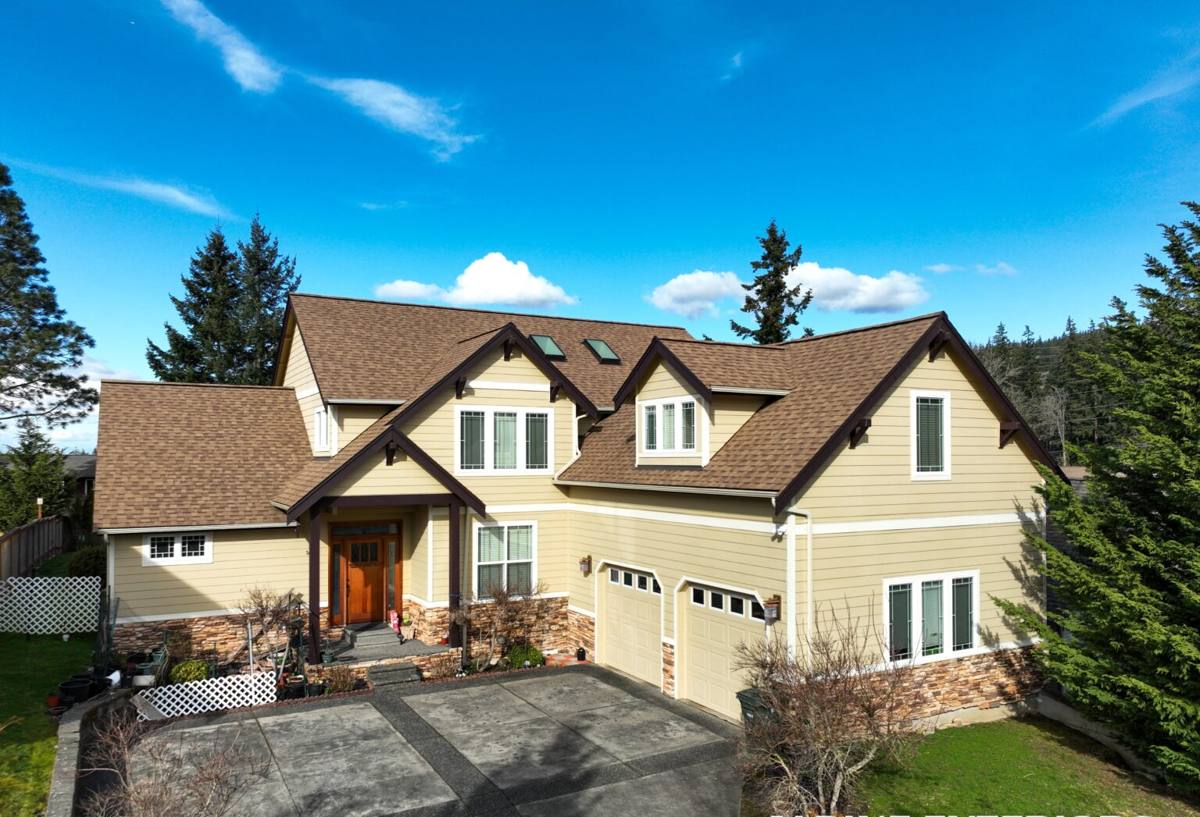
Board and batten has become one of the most requested siding profiles in Happy Valley, and it's easy to see why. The vertical lines pair naturally with the gable roofs, dormers, and craftsman-influenced facades common throughout this part of Bellingham, and it gives an older home a cleaner, more updated look without changing its footprint. It also works well as an accent — many homeowners pair board and batten on a gable end or entry feature with horizontal lap siding on the rest of the house.
But board and batten isn't just a style choice. A vertical profile drains water differently than horizontal lap siding, and it introduces more seams, more fastener penetrations, and more places for water to collect if it isn't detailed correctly. In a climate like ours, that difference matters more than the aesthetics.
What Bellingham's Climate Does to Vertical Siding
Salt Air and Fastener Corrosion
Whatcom County's marine air carries salt further inland than most homeowners expect, and it doesn't take a waterfront lot to feel the effects. Over years, standard fasteners can corrode, streak, and eventually weaken — and on a board and batten wall, the fastener pattern is denser and more visible than on lap siding. We spec fasteners rated for coastal exposure specifically because board and batten gives corrosion more opportunities to show up as staining or loosening over time.
Driving Rain and Panel Joints
Storms moving through the Strait of Georgia and off Bellingham Bay push rain sideways, not straight down. Vertical siding has vertical joints — at battens, at butt seams, and at trim — and those joints are exactly where wind-driven rain wants to get behind the siding. If those joints rely on caulk alone instead of proper flashing and lap detailing, water finds its way in eventually. It's one of the most common failure points we see on board and batten that wasn't installed for this climate.
Moss Season and Trapped Moisture
Bellingham's wet season runs long, and mature tree canopy in established neighborhoods like Happy Valley keeps north- and east-facing walls shaded and damp for much of the year. Siding without a way to dry out — front and back — stays wet longer, and that's exactly the condition moss and algae need to take hold. A board and batten wall installed tight to the sheathing with no drainage path behind it will hold moisture against the wall assembly far longer than one built to let air and water move.
What Correct Board & Batten Installation Actually Involves
Rainscreen and Drainage Plane
Because vertical siding collects more water at its seams than lap siding does, an air gap behind the boards and battens isn't optional in our climate — it's what lets the wall dry from both sides instead of just one. We install a proper water-resistive barrier with a drainage plane behind the siding so any moisture that does get past the surface has somewhere to go besides your sheathing.
Batten Spacing and Fastening
Batten width, spacing, and fastener placement all follow the manufacturer's engineering, not guesswork. Fasteners have to land in framing, follow the correct edge distance, and avoid patterns that trap water between the board and batten instead of shedding it. Get this wrong and you get cupping, splitting at fastener points, or water tracking behind the battens instead of running off them.
Flashing at Windows, Doors, Trim, and Penetrations
Every window, door, light fixture, and hose bib that penetrates a board and batten wall needs its own flashing detail integrated with the drainage plane behind it — not just a bead of sealant at the trim. Kickout flashing where rooflines meet siding walls, drip caps above trim boards, and proper head flashing at windows all matter more on a vertical profile because gravity is working against horizontal joints in a way it doesn't on lap siding.
Why We Only Install James Hardie for This Application
Board and batten can be built from several materials, and each one comes with real trade-offs once you factor in a Pacific Northwest coastal climate. We standardized on James Hardie fiber cement, in Hardie's climate-engineered HZ product line, because it holds up to exactly the conditions Happy Valley deals with:
- Non-combustible fiber cement construction, which also matters for insurance and wildfire-adjacent building code considerations
- Dimensionally stable — it doesn't swell, cup, or split at fastener points the way wood-based board and batten can when it stays damp for long stretches
- Factory-applied ColorPlus finish that resists fading and doesn't need repainting on the same cycle as field-painted wood or primed products
- Engineered specifically for wet, moisture-heavy climates rather than a general-purpose product adapted to fit one
- A strong, transferable manufacturer warranty backed by a company that's been building fiber cement siding for decades
Wood board and batten — cedar or primed spruce — can look great, but end grain at every batten edge is a lot of exposed surface area for moisture to work into, and repainting on a marine-climate schedule is a real, recurring cost. Engineered wood products manage moisture better than raw lumber but are still more installation-sensitive around cut edges and joints than fiber cement. Vinyl board and batten is low-maintenance but expands and contracts more with temperature swings, which shows up as waviness on long vertical runs and limits how crisp the profile ever looks. We don't say any of these products are bad — we simply stopped installing them because Hardie holds up better, longer, in exactly the weather Happy Valley gets.
Board & Batten Options Compared
| Material | Handling of Driving Rain | Salt Air Durability | Maintenance | Long-Term Stability |
|---|---|---|---|---|
| James Hardie Fiber Cement | Strong when installed with proper drainage plane and flashing | High — engineered fiber cement, coastal-rated fasteners | Low — factory finish, occasional rinsing | High — resists swelling, cupping, and splitting |
| Cedar / Primed Wood | Good if maintained; end grain is vulnerable | Moderate — depends on finish upkeep | High — regular repainting and sealing | Moderate — prone to movement if moisture gets in |
| Engineered Wood | Moderate — sensitive at cut edges and joints | Moderate | Moderate — periodic inspection and touch-up | Moderate — depends heavily on installation quality |
| Vinyl | Adequate, but joints rely more on lap fit than flashing | Moderate — can become brittle over time | Low | Lower — expands/contracts with temperature, can wave on long runs |
Our Process for Happy Valley Board & Batten Projects
Assessment and Design
We start by walking the home and looking specifically at the walls where board and batten is going in — checking for existing moisture issues, shaded or damp sections, and how the current wall assembly is performing. From there we work out batten spacing, reveal, color, and how the new siding integrates with existing trim, windows, and doors.
Removal, Prep, and Weather Barrier
Old siding comes off down to the sheathing wherever needed so we can actually see what's underneath — not just re-side over a problem. Any rot or damage gets repaired before anything new goes up, and we install a code-compliant water-resistive barrier and drainage plane as the foundation for everything that follows.
Installation and Finish Walkthrough
Panels and battens go up to manufacturer specification and local code, with flashing integrated at every window, door, and penetration along the way. When the job is done, we walk the homeowner through the finished siding — where the joints are, how the fastener pattern works, and what basic upkeep looks like going forward.
Maintenance Checklist for Board & Batten in a Marine Climate
Board and batten installed correctly needs far less attention than most homeowners expect, but a little seasonal awareness goes a long way in this climate:
- Rinse siding annually, paying extra attention to shaded north- and east-facing walls where moss and algae take hold first
- Keep tree limbs and shrubs trimmed back so walls get airflow and sunlight to dry out between storms
- Check caulked joints at trim, windows, and doors once a year and note any cracking or gaps
- Make sure gutters and downspouts are clear and directing water away from the base of the walls
- Watch for staining or discoloration near grade, which usually points to splashback or a drainage issue rather than a siding problem
- Gently clean any moss growth rather than pressure-washing directly into seams and battens
Why Local Happy Valley Experience Matters
A crew that already works in Happy Valley knows the pattern of hillside lots, mature tree cover, and the mix of older and newer homes that defines this part of Bellingham. That familiarity shows up in practical decisions — which walls need extra drainage detailing because of shade and prevailing wind direction, how existing wall assemblies in older homes typically need to be handled, and what the City of Bellingham expects for permitting and inspection on a re-side. It's the difference between a crew applying generic siding knowledge and one that's already solved these exact conditions on homes near yours.
If you're weighing board and batten siding for a home in Happy Valley, we're happy to take a look and talk through what your specific walls need. Request a free, no-pressure estimate below and we'll walk the property with you before recommending anything.