 Bellingham Exterior
 Siding That Has to Hold Up to Birchwood's Weather, Not Just Look Good on Day One
Birchwood sits close enough to Bellingham Bay and the Salish Sea that homes here take on a specific mix of punishment: salt-laden air moving in off the water, long stretches of driving rain through fall and winter, and a moss season that can run most of the year in shaded, north-facing spots. None of that is unique to one street or one house — it's the baseline for this part of Whatcom County. But it matters enormously when you're choosing what material is going to sit on your exterior walls for the next several decades.
We install James Hardie fiber cement siding exclusively. Not because it's the only product on the market, but because after years of working on homes in this climate, it's the only one we're willing to put our name behind for Birchwood conditions. This page walks through what that actually means for a home in this neighborhood — what the climate does to siding, what correct installation looks like, and how our process works from first visit to final walkthrough.
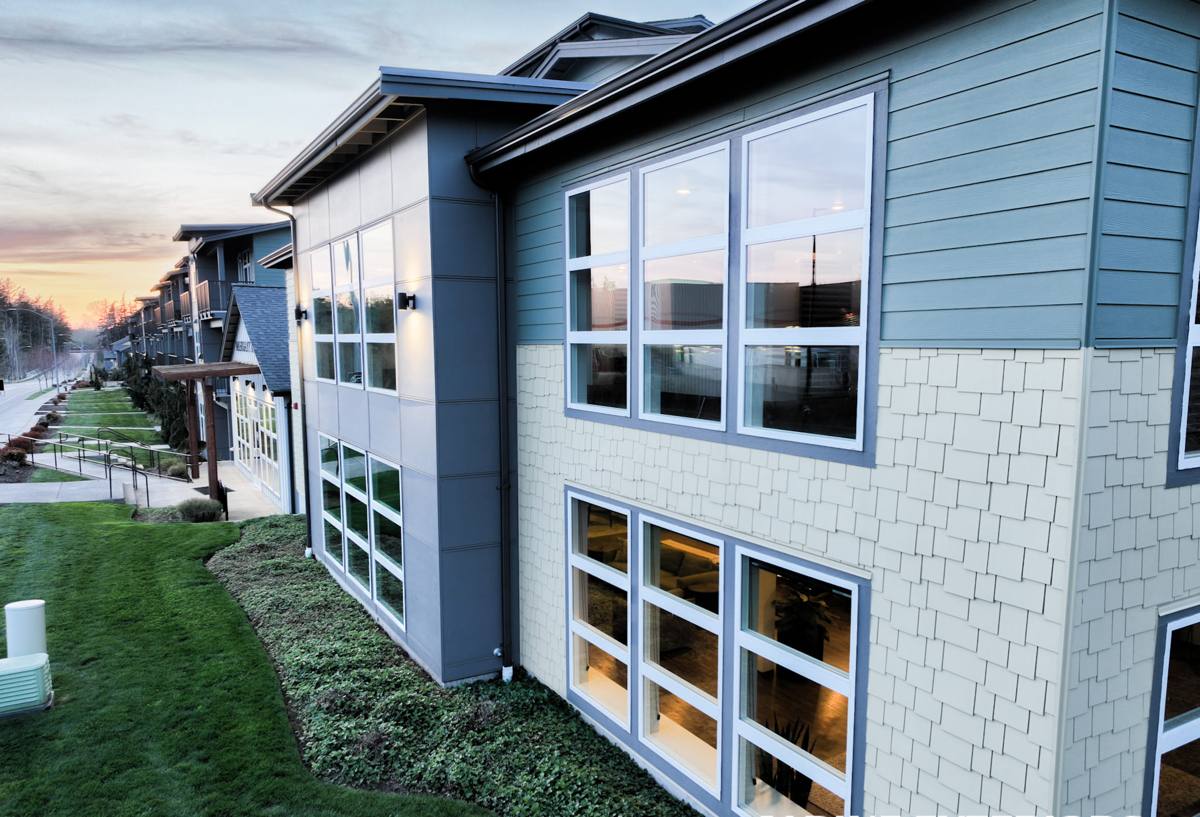
What Salt Air, Rain, and Moss Actually Do to a House
Salt Air and Coastal Exposure
Salt-laden moisture doesn't just sit on the surface of a wall — it works into seams, fastener heads, and any spot where a coating is thin or damaged. Over years, that accelerates corrosion in metal components and breaks down finishes that weren't engineered for a marine-influenced climate. Homes in Birchwood aren't oceanfront, but the bay's proximity is close enough that salt exposure is a real factor, not a theoretical one.
Moss, Shade, and Sustained Dampness
Whatcom County's tree cover and cloud cover combine to keep a lot of exterior wall surfaces damp far longer than a homeowner would guess just by watching the rain gauge. Moss and algae need sustained moisture to establish, and shaded north and east-facing walls in Birchwood often stay wet for days after a storm system passes through. Siding that traps moisture behind it, or that softens and swells when it stays wet, is the wrong material for that environment — no matter how it looks in a showroom.
Driving Rain and Wind-Driven Moisture
Storms off the water don't just fall straight down — wind pushes rain sideways into wall assemblies, seams, and trim. A siding system is only as good as its weakest water-management detail: flashing, laps, and gaps all have to be right, because wind-driven rain will find any shortcut in the installation.
Why We Standardized on James Hardie
James Hardie fiber cement is engineered specifically to resist the failure modes that show up most in this climate. It's non-combustible, it holds its factory finish far longer than field-applied paint systems, and Hardie makes an HZ5 product line specifically formulated for the wetter, harsher climate zones — which is what we install throughout Whatcom County.
What HZ5 Means for a Birchwood Home
Hardie's zone system adjusts the product's formulation for regional climate demands. HZ5 is built for areas with more moisture exposure and freeze-thaw cycling than the mildest climate zones see, which lines up with what Birchwood homes actually experience — sustained damp periods, salt air, and winter cold snaps. It's not a marketing label; it's a materially different product formulation than what gets shipped to drier regions.
ColorPlus Factory Finish
Rather than relying on paint applied on-site — which is only as good as the weather conditions and prep work on installation day — Hardie's ColorPlus finish is baked on in a controlled factory environment before the boards ever reach the job site. That finish is formulated to resist fading and to hold up against the exact UV and moisture cycling this region produces, and it comes with a longer, stronger finish warranty than field-applied paint typically carries.
Why We Don't Install the Alternatives
We get asked about vinyl, LP SmartSide, and other fiber cement brands regularly. Vinyl can crack and warp in temperature swings and doesn't hold up structurally against wind-driven debris the way fiber cement does. LP SmartSide is an engineered wood product — it performs reasonably in drier climates, but wood-based products are more sensitive to sustained moisture exposure, which is exactly what Birchwood's shaded, damp wall sections deliver for much of the year. We're not saying these products fail everywhere; we're saying that for this specific climate, we don't think they're the right long-term bet, and we'd rather stand behind one product we trust completely than offer several we have reservations about.
| Factor | James Hardie Fiber Cement | Vinyl Siding | Engineered Wood (LP SmartSide) |
|---|---|---|---|
| Fire resistance | Non-combustible | Melts/deforms under heat | Combustible |
| Moisture behavior in shaded, damp areas | Resists swelling and rot when installed correctly | Doesn't rot, but can trap moisture behind panels | Wood-based core is moisture-sensitive over time |
| Finish durability | Factory-baked ColorPlus finish | Color molded through, can fade/chalk | Field or factory-primed, repaint cycle needed |
| Coastal/salt air performance | Formulated for HZ5 climate zones | Can become brittle over time | Not specifically engineered for coastal exposure |
| Typical warranty structure | Long-term, transferable limited warranty | Varies widely by manufacturer and grade | Shorter finish warranty, wood substrate caveats |
What a Correct James Hardie Installation Actually Involves
The product is only half the equation. Fiber cement siding installed poorly will still let moisture behind the wall assembly, and that defeats the entire point of choosing a premium material. A correct installation in a climate like Birchwood's comes down to details most homeowners never see once the siding is up.
Flashing and Water Management
Every window, door, and horizontal trim transition needs flashing that directs water out and away from the wall assembly, not into it. This is where driving rain finds its way into a wall if it's skipped or done casually. We treat flashing detail as non-negotiable, not an afterthought.
Proper Gapping and Fastening
Hardie board needs specific clearances at butt joints, corners, and where it meets trim, foundation, and roof lines — gaps that allow the material to handle moisture and temperature movement without buckling or cracking the finish. Fasteners need to be the correct type and driven to the manufacturer's specification; over-driven or under-driven nails are one of the most common causes of siding failure we see when we're called in to fix someone else's work.
House Wrap and Drainage Plane
Behind the siding, a correctly installed weather-resistant barrier and drainage gap give any moisture that does get past the cladding a way to drain and dry out instead of sitting against the sheathing. In a climate with Birchwood's rainfall and humidity, this layer matters as much as the visible siding itself.
Choosing the Right Hardie Line for a Birchwood Home
Not every Hardie product fits every home. Part of our process is walking through which line makes sense for your house's style, exposure, and budget.
- HardiePlank lap siding — the most common choice, available in several textures and exposures, works well on traditional and craftsman-style homes throughout Bellingham.
- HardiePanel vertical siding — often used for board-and-batten looks or as an accent alongside lap siding on modern or farmhouse-style exteriors.
- HardieTrim — used around windows, corners, and fascia to give a finished, consistent look and to protect the most water-exposed transition points on the house.
- HardieShingle — a shingle-profile option for homes where that architectural style fits, without the maintenance burden of real wood shingles.
Our Process for a Birchwood Siding Project
We keep the process straightforward and communicate at each stage, since re-siding a home is disruptive enough without added uncertainty.
- On-site assessment. We walk the exterior, check for existing moisture damage, note shaded and exposed wall sections, and look at trim, flashing, and window details that will factor into the installation plan.
- Tear-off and inspection. Once old siding comes off, we inspect the sheathing and house wrap underneath — this is often where hidden moisture damage from a prior installation shows up, and it needs to be addressed before new siding goes on, not covered over.
- Water management install. House wrap, flashing, and drainage details go in first and get checked before any Hardie board is hung.
- Siding installation. Boards are cut, gapped, and fastened to Hardie's specifications, with attention to corners, butt joints, and trim transitions.
- Final walkthrough. We go over the finished work with you directly and point out anything you should know for long-term care.
Living With Hardie Siding in a Moss and Salt Climate
James Hardie siding is low-maintenance compared to wood or vinyl, but "low-maintenance" doesn't mean "no maintenance" in this climate. A little seasonal attention goes a long way toward protecting the investment.
- Rinse the exterior with a garden hose (not a pressure washer aimed directly at seams) once or twice a year to clear salt residue and organic buildup before it establishes.
- Keep gutters clear so overflow doesn't run down and stay against wall surfaces longer than necessary.
- Trim back vegetation and tree limbs near shaded walls to improve airflow and sun exposure, which slows moss growth.
- Check caulking around trim and penetrations annually — caulk is a maintenance item even on a system built for this climate.
- Address any impact damage or chipped finish promptly rather than letting it sit through a wet season.
Why a Crew That Already Works Birchwood Matters
Whatcom County's building department, typical framing conventions in older Bellingham neighborhoods, and the specific microclimate differences between a shaded inland lot and a more wind-exposed one near the water all factor into how a siding job should be planned. A crew that already works in this area knows what to expect before tear-off even starts — which saves surprises, delays, and costs once the walls are open. We're not guessing at what this climate does to a house; we're building around what we've already seen it do.
If you're weighing a siding replacement or repair in Birchwood, we're happy to take a look and give you a straightforward, no-pressure estimate — no obligation, just an honest read on what your home needs.