 Bellingham Exterior
 Roof Repair Built for South Hill's Conditions
South Hill sits up above downtown Bellingham with views of the bay, mature tree canopy, and a mix of older character homes alongside newer builds on the slope. That combination is beautiful to live in and hard on a roof. Elevation and exposure mean more direct wind off Bellingham Bay, tree cover means more shade and debris, and Whatcom County's long wet season means moisture sits on these roofs for months at a time. A roof repair here has to account for all three, not just patch the spot that's leaking.
We've repaired enough roofs on this hill to know the failure patterns are different from a flat-lot subdivision roof a few miles inland. Steeper pitches, older decking on some of the historic homes, and heavier moss loads under the tree canopy all change what "doing it right" looks like.
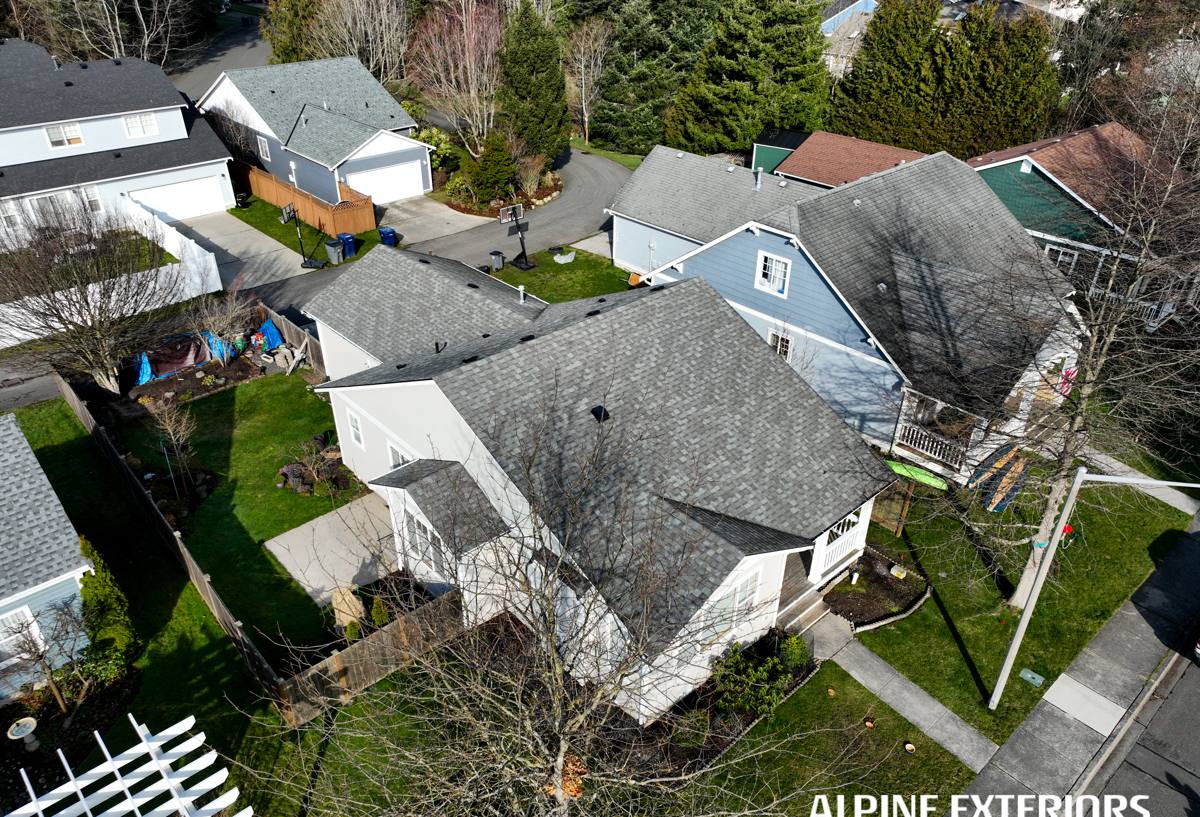
Common Roof Problems We Find on South Hill Homes
Most of the repair calls we get from this neighborhood fall into a handful of categories:
- Moss and algae buildup in shaded, north-facing sections that hold moisture and slowly lift shingle edges
- Flashing failures around chimneys, skylights, and roof valleys — the most common source of an active leak, and the most commonly misdiagnosed
- Clogged gutters and downspouts from falling leaves and fir needles, which back water up under the roof edge and rot the fascia board
- Wind-driven rain intrusion where a gust off the bay pushes rain sideways under a shingle tab or a poorly sealed vent boot
- Aging roofing materials on some of South Hill's older homes, where the roof has already had one or two patch jobs layered on top of each other
Salt air off the bay also plays a quiet role. It accelerates corrosion on exposed metal fasteners, flashing, and vent caps faster than it would further inland, which is one reason we favor corrosion-resistant materials for any exposed metal on a repair.
Signs Your Roof Needs Repair, Not Just a Look
Homeowners often wait until there's a stain on the ceiling, but by then water has usually been getting in for a while. Watch for these earlier signs:
- Dark streaking or thick moss growth concentrated in one area of the roof
- Granules collecting in gutters or at the base of downspouts
- Curling, cracked, or missing shingles, especially after a windstorm
- Daylight visible through the attic roof deck
- Soft or spongy spots when walking the roof (a job for us, not you)
- Water stains on interior ceilings near chimneys, skylights, or exterior walls
- Sagging in the roofline between rafters
- Rust streaks below metal flashing or vent caps
Any one of these is worth a call. Several at once usually means the damage has been building for more than one wet season.
What a Correct Roof Repair Actually Involves
A lasting repair is more than caulk over a crack. Done right, it starts with figuring out why the failure happened in the first place — a bad seal, an undersized flashing, ice or debris damming water — so the fix addresses the cause, not just the symptom.
Tear-back, not surface patching
We pull back the surrounding shingles or roofing material to expose the underlayment and decking, not just smear sealant over the visible gap. If the decking underneath is soft or delaminating from prolonged moisture, that gets addressed before anything goes back down — patching over wet decking just hides the problem for another season.
Flashing done to hold, not just to look sealed
Valleys, chimneys, and skylights all rely on flashing that's lapped correctly with the roofing material so water sheds over it, not under it. A lot of the leaks we find started as a flashing repair someone sealed with caulk instead of correcting the metalwork. Caulk fails in a season or two on a roof that sees this much rain; proper flashing lasts as long as the roof around it.
Material matching
We match shingle type, color, and profile as closely as the market allows so a repair doesn't stand out as an obvious patch. On older South Hill homes with discontinued or weathered shingle lines, we'll walk you through the realistic options rather than promise an invisible match we can't deliver.
Repair or Replace? How We Help You Decide
Not every roof problem calls for a repair, and not every roof problem calls for a full replacement. We look at the whole picture before recommending either one.
| Factor | Leans Toward Repair | Leans Toward Replacement |
|---|---|---|
| Roof age | Under 15-20 years, depending on material | Near or past its expected lifespan |
| Extent of damage | Localized to one section or feature | Widespread across multiple roof planes |
| Decking condition | Solid, dry decking under the affected area | Soft, delaminated, or rotted decking in several spots |
| Repair history | First or second repair on this roof | Multiple past patches in different areas |
| Underlying cause | Isolated event (storm damage, one failed vent boot) | Systemic issue (poor original install, chronic moisture) |
We'll give you an honest read on which column your roof falls into, and we won't push a full replacement when a well-done repair will genuinely hold.
Our Roof Repair Process
- Inspection. We walk the roof and the attic where accessible, checking not just the reported problem area but the rest of the roof for related issues.
- Written estimate. You get a clear scope of work and price before anything starts — no surprise add-ons mid-job.
- Repair. We tear back to sound material, correct the underlying cause, and rebuild the section with matched materials and proper flashing.
- Cleanup. Old materials, debris, and any dislodged moss or granules are cleared from the roof, gutters, and ground.
- Walk-through. We show you what was found and what was done before we call the job finished.
Moss and Algae: Prevention as Part of the Repair
Whatcom County's wet season runs long, and shaded lots under mature trees stay damp even longer. Moss doesn't just look bad — it holds water against the roofing material and works its way under shingle edges, which is how a moss problem turns into a leak. When we repair a section affected by moss, we also address why it grew there in the first place.
That usually means clearing existing growth carefully (not power-washing, which can strip granules and shorten shingle life), and where it makes sense, installing zinc or copper strips near the ridge that let rain carry trace metal down the roof and slow regrowth. We'll also flag if overhanging branches are keeping a section of roof shaded and damp longer than it should be — that's a conversation worth having with whoever handles your trees, since it affects how often the roof needs attention going forward.
Gutters matter just as much here. A gutter packed with needles and leaves sends water back under the roof edge instead of off it, which rots fascia boards and soaks the roof deck from below. Keeping gutters clear is one of the cheapest ways to extend the life of a South Hill roof.
Why a Crew That Already Works South Hill Matters
Steep, hillside lots change how a roof repair gets done. Access is often tighter, pitches can be steeper than a standard subdivision roof, and older homes on the hill sometimes have plank decking instead of plywood, which changes how fasteners and underlayment perform. A crew that hasn't worked this kind of terrain before can misjudge setup time, safety anchoring, or how a repair needs to be sequenced around the home's layout.
We also know that homes on this hill see more direct exposure to weather coming off Bellingham Bay than roofs tucked into more sheltered parts of the county. That shapes small decisions — fastener choice, sealant selection, how tight a flashing lap needs to be — that don't show up on a spec sheet but matter over the life of the repair.
Roofing Materials We Repair
South Hill has a mix of roofing types across its housing stock, and we work on the common ones you'll find in Bellingham:
- Asphalt composition shingle — the most common material, straightforward to repair and match when done with the right underlayment and flashing
- Metal roofing — durable in this climate but requires careful attention to fastener seals and panel seams during a repair
- Cedar shake and shingle — common on some of South Hill's older homes; repairs require matching weathering and understanding how the material breathes and moves with moisture
Whatever is currently on your roof, we'll tell you honestly whether it's a good candidate for a durable repair or whether the material itself is working against you.
Get an Honest Look at Your Roof
If you're seeing moss buildup, a stain on a ceiling, or just want a roof that's held up through a few wet seasons checked before the next one, we're glad to take a look. We'll give you a straight answer on what's actually going on and what it takes to fix it — no pressure, no upsell. Use the form below to request a free estimate for roof repair on your South Hill home.