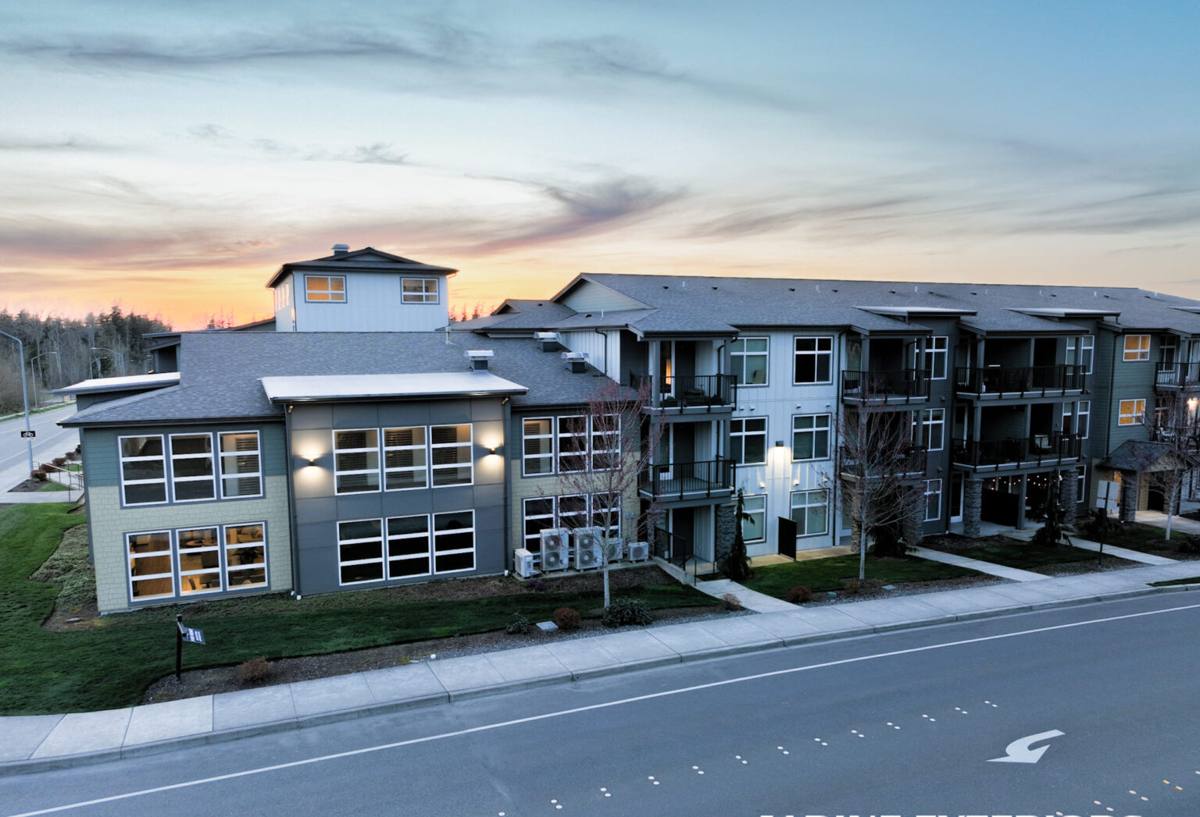
 Bellingham Exterior
 Why Happy Valley Roofs Wear Out Differently
Happy Valley sits close enough to Bellingham Bay and the surrounding waterways that homes here deal with a specific combination of weather stress most inland neighborhoods don't see as heavily: salt-laden air, wind-driven rain that comes in sideways off the water, and a long, damp moss season that can run from fall through spring. None of these factors alone is unusual for Whatcom County. Together, over the life of a roof, they add up faster than most homeowners expect.
Salt air is corrosive to exposed metal fasteners, flashing, and vent components. Driving rain finds weaknesses at laps, valleys, and penetrations that a straight-down rain would never expose. And moss doesn't just look bad — it holds moisture against the roof surface, works its way under shingle tabs, and lifts material over time. A roof replacement in this neighborhood has to be planned around all three, not just whichever one happens to be top of mind when you call.
Signs a Repair Won't Cut It Anymore
Not every roof problem in Happy Valley means a full replacement. But there's a point where patching starts costing more than it's worth, and it's worth knowing where that line is before you spend money on a repair that only buys you a season or two.
- Granule loss heavy enough that you can see bare or shiny patches on multiple slopes, not just one spot
- Shingles curling, cupping, or lifting at the edges across large sections of the roof
- Moss established in the shingle mat itself, not just on the surface — it separates from the roof but the mat underneath is already compromised
- Soft spots or sagging in the roof deck, usually found by walking the roof or noticing it from the attic
- Repeated leaks in different locations after past patch jobs
- The roof is at or past the manufacturer's expected service life for the material and local exposure
If you're only seeing one or two of these, a repair may genuinely be the right call. If several are showing up together, that's usually the roof telling you it's done working with patches.
What a Correct Roof Replacement Actually Involves
A roof replacement done right in this climate is more than swapping old shingles for new ones. It's a system, and every layer of that system has a job to do against the specific conditions Happy Valley sees.
Tear-Off and Deck Inspection
We remove the old roofing down to the deck rather than layering over it. That's the only way to actually see what's underneath — soft or rotted decking, hidden moisture damage, or old flashing that's been quietly failing for years. Any compromised decking gets replaced before anything new goes down, because new roofing over a bad deck just hides the problem instead of fixing it.
Underlayment and Water Barrier
Given how much driving rain this area gets, underlayment selection matters more here than it would somewhere with mostly straight-down rainfall. We use synthetic underlayment as standard, with self-adhering ice-and-water barrier at eaves, valleys, and around penetrations — the spots where wind-driven rain is most likely to work its way under the roofing material.
Flashing and Penetrations
Chimneys, vents, skylights, and wall intersections are where most roof leaks actually start, not in the open field of shingles. Flashing gets replaced as part of a proper roof replacement, not reused, and installed with the sequencing that keeps water moving down and out rather than finding a way in.
Ventilation
Balanced intake and exhaust ventilation keeps the attic dry and temperature-regulated, which does two things for a coastal Whatcom County home: it protects the roof deck from moisture damage from the inside, and it reduces the temperature swings that accelerate shingle aging from the outside.
Comparing Roofing Materials for This Climate
There's no single "best" roofing material for every home — it depends on your roof's exposure, your home's style, and how much long-term maintenance you're willing to take on. Here's how the common options stack up against the specific conditions Happy Valley homes face.
| Material | Moss & Moisture Resistance | Wind-Driven Rain Performance | Maintenance Burden |
|---|---|---|---|
| Architectural asphalt shingle | Good with algae-resistant granules; moss still needs periodic cleaning | Strong when properly nailed and flashed | Low to moderate |
| Standing seam metal | Excellent — smooth surface sheds moss and debris | Excellent, especially at seams and laps | Low |
| Cedar shake | Poor without diligent upkeep — moss and moisture are the main threat to shake life in this climate | Good when installed with proper spacing and underlayment | High |
| Synthetic/composite shake or slate | Very good — resists moisture absorption that natural wood doesn't | Good | Low |
We're upfront with Happy Valley homeowners about cedar shake: it can look great, but in a climate with this much sustained moisture and moss pressure, it demands a maintenance schedule most homeowners underestimate. If you want that look with less long-term upkeep, a synthetic shake product gets you closer to a "install it and mostly forget it" roof, which is why we lean toward recommending it over natural wood in this specific area.
Our Roof Replacement Process
- On-site assessment — we walk the roof, check the attic, and evaluate deck condition, ventilation, and existing flashing before quoting anything.
- Written estimate — clear scope, material options, and what's included, with no vague allowances hiding surprise costs later.
- Tear-off and deck repair — old roofing removed, deck inspected and repaired as needed, debris kept contained on-site.
- Underlayment, flashing, and roofing installation — installed to manufacturer spec, with extra attention at valleys, eaves, and penetrations given local wind and rain patterns.
- Ventilation check — intake and exhaust balanced for the specific attic and roof configuration.
- Final walkthrough and cleanup — magnetic sweep for nails, site cleanup, and a walk-through so you know exactly what was done.
Moss, Algae, and What Happens After Installation
A new roof doesn't make moss season disappear — it just gives you a roof built to handle it better. Tree cover and shaded, north-facing slopes common in parts of Happy Valley mean moisture sits longer on the roof surface than it would on a fully exposed lot. A few things help keep a new roof performing the way it should:
- Zinc or copper strips near the ridge, which release trace amounts of metal ions that inhibit moss growth as rain washes over them
- Keeping gutters and valleys clear of needles and debris, which is where moss tends to establish first
- Trimming back overhanging branches where practical, to reduce shade and debris buildup on the roof
- A periodic soft wash or gentle moss removal rather than pressure washing, which can strip granules and shorten shingle life
None of this is about babying the roof — it's routine upkeep that meaningfully extends the life of any roofing material in a moss-prone, moisture-heavy area like this one.
What Drives the Cost of a Roof Replacement
Every roof is different, and the only way to get an accurate number is a real on-site look. But these are the factors that most often move the price up or down.
| Factor | Impact on Cost |
|---|---|
| Roof size and number of slopes | High — more area and more valleys/hips mean more material and labor |
| Roof pitch and access | Medium to high — steep or hard-to-access roofs take longer and require more safety setup |
| Material choice | High — asphalt, metal, and synthetic products carry different material costs |
| Deck condition | Variable — hidden rot or soft decking found during tear-off adds repair cost |
| Layers of existing roofing | Medium — multiple layers to remove increase tear-off labor and disposal |
| Ventilation and flashing upgrades | Low to medium — worthwhile long-term investment, modest cost relative to the whole job |
Why Local Experience in Happy Valley Matters
A roofing crew that regularly works this part of Bellingham already understands things a crew from outside the area has to learn on your dime: which slopes in this neighborhood tend to hold moss longest, how much wind-driven rain protection actually matters at valleys and eaves here versus somewhere more sheltered, and what Whatcom County permitting and inspection expects for a residential roof replacement. That familiarity shows up in fewer surprises during the job and a roof that's built for the conditions it will actually face, not a generic install.
It also matters for accountability. A contractor working long-term in Bellingham and Whatcom County has a reputation to maintain in this community — that's a different incentive structure than a crew passing through on a storm-chasing route.
Questions Worth Asking Before You Hire
- Are you licensed and insured to do roofing work in Washington State, and can you provide proof?
- Will you inspect and repair the deck if it's found to be damaged, or is that a separate, surprise cost?
- What underlayment and flashing details do you use, and why, for a home in this specific location?
- Is the estimate a fixed scope, or are there vague allowances that could change the final price?
- What does the manufacturer's warranty actually cover, and is it a manufacturer warranty, an installer warranty, or both?
- Do you handle permitting with Whatcom County or the City of Bellingham as part of the job?
If your roof is showing its age or you're just not sure whether it's a repair or a replacement situation, we're happy to take a look. A free, no-pressure estimate gets you a clear answer and a real number for your Happy Valley home — no obligation either way.