 Bellingham Exterior
 Storm Damage Roof Repair for Cordata Homes
Cordata sits in north Bellingham, close enough to the water that salt-laden air reaches every roof in the neighborhood, and close enough to the foothills that wind and rain move through in bursts rather than steady, predictable weather. When a windstorm rolls through Whatcom County off the Strait or a winter system dumps heavy rain for days at a time, Cordata roofs take it from more than one direction. We repair storm-damaged roofs in this neighborhood regularly, and the damage pattern here is consistent enough that we can tell you what to expect before we even climb up.
This page is about one thing: storm damage roof repair, done correctly, for homes in Cordata. Not a full re-roof pitch, not a generic list of roofing services — just what storm damage actually looks like on a roof like yours, what a correct repair involves, and why the crew doing that repair should already know this neighborhood.
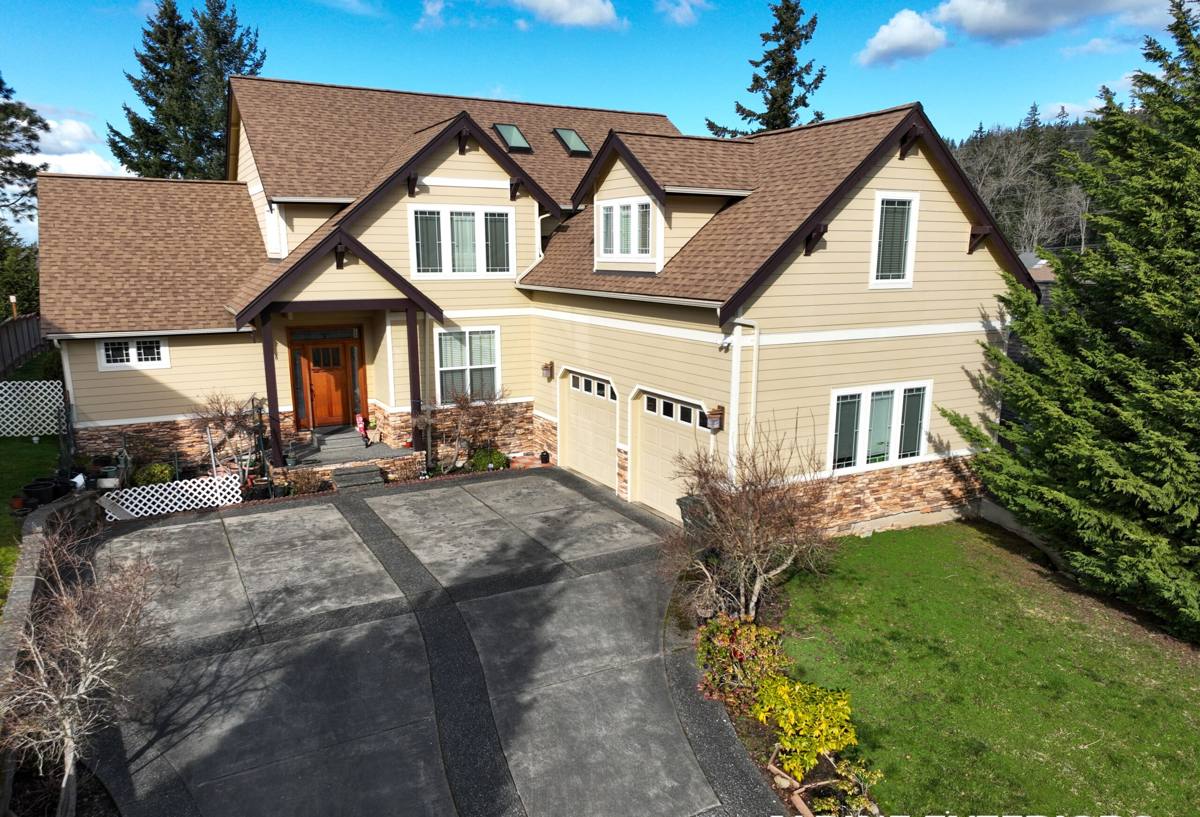
What Bellingham's Climate Does to a Storm-Damaged Roof
Storm damage rarely announces itself as a single dramatic event. In this part of Whatcom County, it's usually the combination of three things working on a roof at once:
- Wind-driven rain that gets pushed sideways under shingles, flashing, and ridge caps instead of running off the way it would in a straight downpour.
- Salt air off Bellingham Bay that accelerates corrosion on exposed nails, flashing, and metal fasteners, so storm-loosened material fails faster than it would inland.
- A long moss season — our wet, mild winters and shaded lots mean moss and moisture sit on north-facing slopes for months, holding water against shingles that a storm has already stressed or lifted.
Individually, none of these are dramatic. Together, they mean a storm that just loosens a few shingles in a drier climate can turn into a active leak here within a few weeks, because the follow-on rain and moss don't give the roof time to dry out and reseal itself.
Signs Your Cordata Roof Has Storm Damage
Some storm damage is obvious right after a wind event. Most of it isn't — it shows up later as a stain, a draft, or a soft spot. Walk your property and check for these after any significant wind or rain event:
- Shingles that look lifted, curled, or out of line with their neighbors, especially on the side of the roof that faces prevailing wind
- Granules collecting in gutters or at downspout outlets — a sign of impact or wind abrasion on the shingle surface
- Bent, lifted, or missing flashing around chimneys, vents, and skylights
- New or expanding ceiling stains, especially near exterior walls or around penetrations
- Gutters pulled away from the fascia, or downspouts disconnected at a joint
- Debris — branches, needles, moss clumps — built up in valleys where water is supposed to flow freely
- Soft or spongy decking felt underfoot if you're checking an attic or crawlspace after a storm
None of these guarantee a major problem, but any one of them is worth a proper inspection before the next system moves through.
What a Correct Storm Damage Repair Actually Involves
A rushed storm repair — tarp it, nail down what's loose, call it done — is one of the most common ways a roof ends up with a repeat leak six months later. A correct repair works from the decking out, not just at the visible surface:
1. Decking Assessment
Before any new material goes down, the decking underneath needs to be checked for moisture intrusion and soft spots. Covering wet or compromised decking with new shingles just traps the problem.
2. Underlayment Integrity
Wind-driven rain often gets past the shingle layer before it gets past the underlayment. If the underlayment itself is torn, displaced, or saturated, replacing shingles alone won't stop the leak.
3. Flashing Repair or Replacement
Flashing around chimneys, skylights, vent pipes, and roof-to-wall transitions is the single most common failure point in storm damage. Bent or lifted flashing needs to be reset or replaced, not just re-caulked.
4. Matching Shingle Replacement
Replacement shingles need to match the existing roof's exposure and fastening pattern closely enough that the repair sheds water the same way the surrounding roof does — not just look similar from the ground.
5. Moss and Debris Clearing
Given how long moss season runs here, any repair on a north-facing or shaded slope should include clearing existing moss and debris so the new material isn't sealed in against moisture from day one.
Our Process: Inspection Through Finished Repair
- Inspection. We walk the roof and the attic where accessible, documenting the extent of damage — not just the spot that's visibly leaking.
- Honest assessment. We tell you plainly whether this is a targeted repair or whether the damage is extensive enough that repair would be a short-term patch on a roof nearing the end of its service life.
- Written scope and estimate. You get a clear description of what will be repaired, with what materials, before any work starts.
- Repair work. Decking, underlayment, flashing, and shingles are addressed in that order, not skipped to save time.
- Final check. We confirm water is shedding properly at the repair site and at adjacent transitions, not just at the original damage point.
Repair vs. Replacement: How We Help You Decide
Not every storm-damaged roof needs a full replacement, and not every roof is a good candidate for another round of patching. The table below covers the factors that actually drive that decision:
| Factor | Favors Repair | Favors Replacement |
|---|---|---|
| Roof age | Under 15 years, or recently replaced | Approaching or past expected service life |
| Extent of damage | Localized to one slope or feature | Spread across multiple slopes or repeated storm events |
| Decking condition | Dry, solid underneath | Soft, delaminated, or moisture-damaged in multiple spots |
| Repair history | First storm-related repair | Third or fourth repair in recent years |
| Material availability | Matching shingles still available | Discontinued product, visible mismatch likely |
We'll walk you through where your roof lands on each of these before recommending one path over the other — this is a judgment call we make with you, not a default sales pitch toward the bigger job.
Materials and Cost Factors in a Storm Repair
What a storm repair costs depends less on the storm itself and more on how much of the roof system was affected. Broad cost drivers include:
| Cost Factor | Why It Matters |
|---|---|
| Decking replacement needed | Wet or soft plywood must be cut out and replaced before new roofing goes down |
| Flashing scope | Chimney, skylight, and multi-plane flashing take more labor than a straightforward field repair |
| Shingle matching | Older or discontinued products may require a larger repair area to blend properly |
| Roof pitch and access | Steeper Cordata rooflines and limited access points affect labor time |
| Moss and debris removal | Heavier buildup on shaded slopes adds prep time before repair work starts |
We give you a broad, honest range up front and firm numbers in the written estimate — no surprise line items after the work has started.
Insurance Claims and Storm Repairs
Many storm repairs in Cordata go through a homeowner's insurance claim. We're not a public adjuster and won't pretend to speak for your insurer, but we can document damage clearly — photos, measurements, and a written scope — in a form that's useful when you're filing a claim. Getting an inspection done soon after a storm event, rather than waiting, generally makes that documentation stronger and the timeline of damage easier to establish.
Why Hiring a Crew That Already Works in Cordata Matters
Storm repair isn't a job you want to learn on. A crew that's already worked roofs in this neighborhood knows what north Bellingham wind does to a roofline, how far salt air travels inland from the bay, and how long moss actually sits on a shaded slope before it starts causing real damage — not textbook knowledge, but the pattern recognition that comes from doing this work here, repeatedly, in Whatcom County's specific weather. That's the difference between a repair that holds through the next winter and one that reopens with the next storm.
If you've got storm damage on a Cordata roof — or you're not sure whether what you're seeing is storm damage or just normal wear — we're glad to take a look. Estimates are free, there's no pressure to sign anything on the spot, and you'll get a straight answer about what your roof actually needs. Use the form below to get in touch and we'll schedule a time to come out.