 Bellingham Exterior
 Siding Repair Built for Sunnyland's Climate
Sunnyland is one of Bellingham's older, well-established residential neighborhoods, and that means a lot of homes here are wearing siding that's been through decades of Whatcom County weather. Salt-laced air drifting up from Bellingham Bay, driving rain that comes in sideways during winter storms, and a moss season that can stretch from October through April all put steady, cumulative stress on exterior walls. None of it is dramatic on any given day. It's the slow accumulation — a little more moisture behind a joint here, a little more corrosion on a fastener there — that eventually shows up as soft trim, a stained wall, or a section of siding that's started to pull away from the house.
Siding repair is a different job than siding replacement, and it deserves its own approach. Done right, a repair stops the damage at its source, matches the surrounding material and finish, and holds up under the same conditions that caused the original problem. Done wrong, it's a patch that looks fine for a season and then fails again in the same spot. Our crew works Sunnyland regularly, so we've seen how these specific issues play out on this specific kind of housing stock, and we bring that knowledge to every repair estimate.
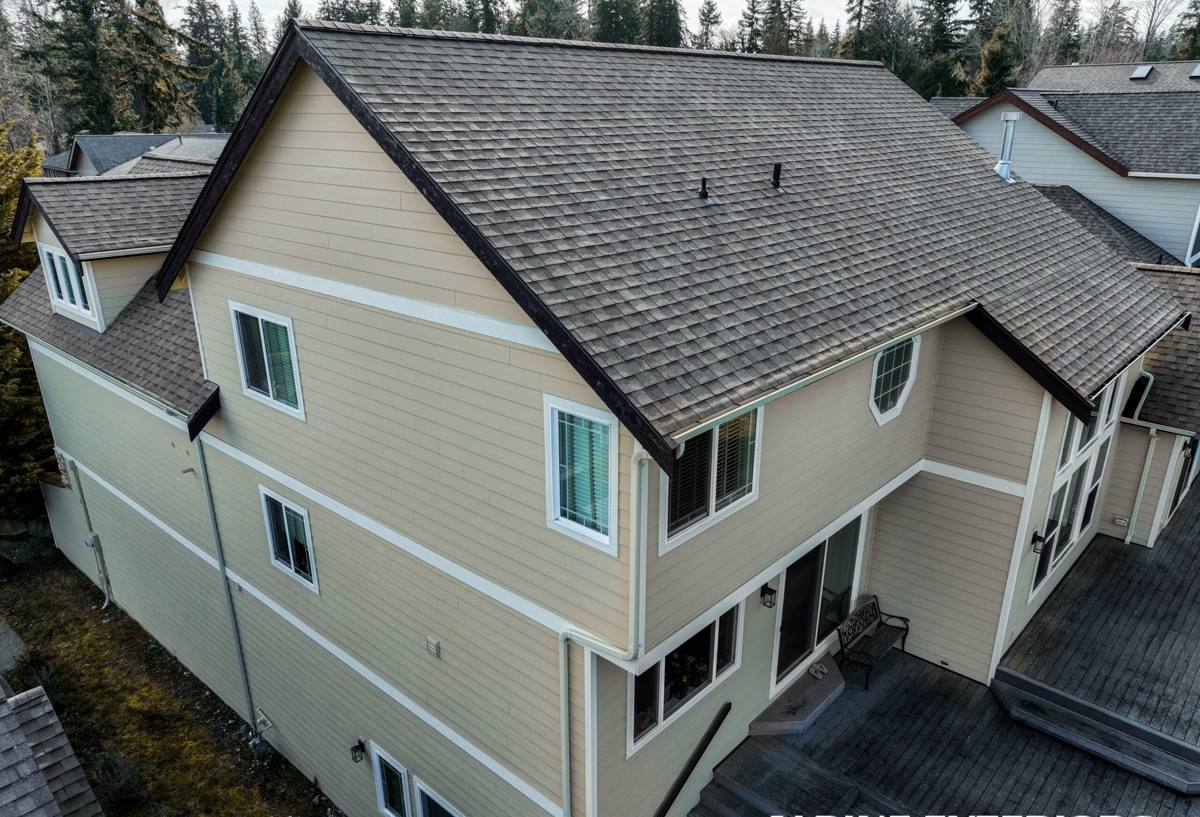
Signs Your Sunnyland Home Needs Siding Repair
Most siding problems give some warning before they turn into a bigger repair. Homeowners in this neighborhood should watch for:
- Soft or spongy spots when you press on the siding, especially near the bottom courses and around windows
- Dark green or black staining that keeps returning after cleaning, particularly on shaded or north-facing walls
- Paint that's bubbling, peeling, or chalking unevenly in one area rather than across the whole wall
- Visible gaps, cracks, or warping at seams and corners
- Rust streaks running down from nail heads or trim fasteners
- A musty smell or visible staining on interior walls that share an exterior wall with a damaged section
- Siding that flexes or feels loose when pushed, which usually means the fastening or the sheathing behind it has failed
Any one of these on its own is usually a straightforward repair. Several showing up together, or damage that's spread across more than one wall, is a sign the problem has been developing for a while and deserves a closer look before deciding on a fix.
What's Really Damaging Siding in This Neighborhood
Salt Air and Metal Fasteners
Bellingham's proximity to the water means the air carries a fine salt content that settles on exterior surfaces year-round, and it's worse on homes with more open exposure. Salt accelerates corrosion on exposed metal — nail heads, trim flashing, and any fastener that wasn't properly capped or coated. Once a fastener corrodes, it loses its grip and can allow water to track in around the hole, which is a very common, very avoidable cause of localized rot.
Driving Rain and Wind-Driven Moisture
Whatcom County storms don't just drop rain straight down — wind pushes it sideways into seams, laps, and trim joints that were never meant to handle direct saturation. Over time, wind-driven rain finds any weak point in the caulking, flashing, or overlap and works its way behind the siding. That's when you start seeing damage to the sheathing and framing underneath, which is a bigger repair than the visible siding damage alone would suggest.
Moss, Shade, and Trapped Moisture
Mature tree cover is common through Sunnyland, which is good for the neighborhood's character but tough on siding. Shaded walls stay damp longer after rain, and that moisture, combined with organic debris in gutters and against siding, gives moss and algae exactly the conditions they need to take hold. Moss doesn't just look bad — it holds moisture against the siding surface for extended periods, which softens wood-based products and accelerates finish breakdown on almost any material.
Repair or Replace? How We Make the Call
Not every damaged section needs full replacement, and we don't push full replacement when a targeted repair will genuinely hold up. The decision usually comes down to how contained the damage is and what's happening behind the surface.
| Factor | Favors Repair | Favors Replacement |
|---|---|---|
| Extent of damage | Isolated to one or two sections | Spread across multiple walls |
| Sheathing condition | Sound, dry framing underneath | Soft or rotted sheathing found during inspection |
| Age of existing siding | Mid-life, otherwise performing well | Near or past its expected service life |
| Material match | Compatible repair material available | Original product discontinued or mismatched |
| Recurrence | First occurrence in that spot | Same area has failed and been patched before |
We won't know which side of that table your project falls on until we've actually opened up and inspected the damaged area — that's a core part of the estimate, not an upsell after the fact.
What a Correct Siding Repair Actually Involves
Diagnosing the Real Problem, Not Just the Symptom
A stained or soft section of siding is a symptom. The cause could be a failed seal at a window, a gutter that's overflowing onto the wall below, missing or damaged flashing, or moisture that's simply been trapped by moss for too long. Repairing the visible siding without addressing the cause means the same damage comes back. Every repair we do starts with figuring out why that specific spot failed.
Matching Materials the Right Way
Patch repairs only look right and perform right when the replacement material matches the existing siding's profile, exposure, and finish. This is one of the reasons repair work on older siding can be more involved than it first appears — older profiles and colors aren't always still in production, and a poor match stands out and can behave differently under moisture than the surrounding material.
Sealing and Flashing Details
The visible siding is only half the job. Correct repair work re-establishes proper flashing and water management at the repair site — laps that shed water correctly, sealant only where it belongs, and a drainage path that doesn't dead-end moisture behind the wall. Skipping this step is exactly how a "repaired" spot fails again within a year or two.
Our Repair Process
- Inspection and diagnosis — we examine the damaged area, check for moisture intrusion, and where needed, open up a small section to assess the sheathing and framing condition
- Scope and estimate — we explain exactly what we found, whether repair or replacement is the right call, and what the work will involve, in plain terms
- Removal of damaged material — compromised siding, trim, and any affected sheathing is removed back to sound material
- Repair of the water management layer — house wrap, flashing, and any framing repairs are addressed before new siding goes back on
- Installation of matched or replacement siding — patched with compatible material, or transitioned to James Hardie fiber cement where a lasting fix calls for it
- Finish work — caulking, trim, and paint or factory finish detailing so the repair blends with the surrounding wall
Why a Local Sunnyland Crew Matters
Siding repair is a job where local, hands-on experience actually changes the outcome. A crew that regularly works this part of Bellingham has already seen how tree canopy, shade patterns, and salt exposure play out on homes in this specific area, which means less guesswork during diagnosis and a faster, more accurate estimate. It also means a shorter response time after a storm, when a damaged section needs to be stabilized before more water gets in, and a crew that's still around and reachable if a question comes up after the work is done.
Why We Repair With James Hardie Materials
Our company installs James Hardie fiber cement siding exclusively — we don't install vinyl, LP SmartSide, cedar, or primed spruce. That standard applies to repair work too. When a patch calls for new material, we use Hardie board matched to your home's existing profile and, where possible, factory ColorPlus finish, because it holds up to the same salt air and moisture exposure that caused the original damage without the maintenance burden of repainting every few years.
If an inspection turns up damage that's too widespread for a clean patch, or if the existing siding material is failing broadly rather than in one spot, we'll tell you honestly and lay out what a full Hardie replacement would look like — engineered for Pacific Northwest moisture, non-combustible, and backed by a strong transferable warranty. We'd rather give you an honest repair-versus-replace assessment than sell a patch that won't last.
After the Repair: Keeping Moss and Moisture From Coming Back
A good repair lasts a lot longer with a little basic upkeep, especially in a shaded, tree-covered neighborhood like Sunnyland:
- Keep gutters clear so water isn't overflowing onto the wall below
- Trim back branches and shrubs that keep siding shaded and damp
- Rinse moss and algae growth off before it has a chance to establish, especially on north-facing walls
- Check caulking at trim and window joints once a year and re-seal where it's cracked or shrunk
- Walk the exterior after major windstorms to catch new damage early, before it has time to spread
If you're seeing any of the warning signs above, or you just want an honest opinion on a section of siding that's been bothering you, we're happy to take a look. Reach out for a free, no-pressure estimate using the form below.