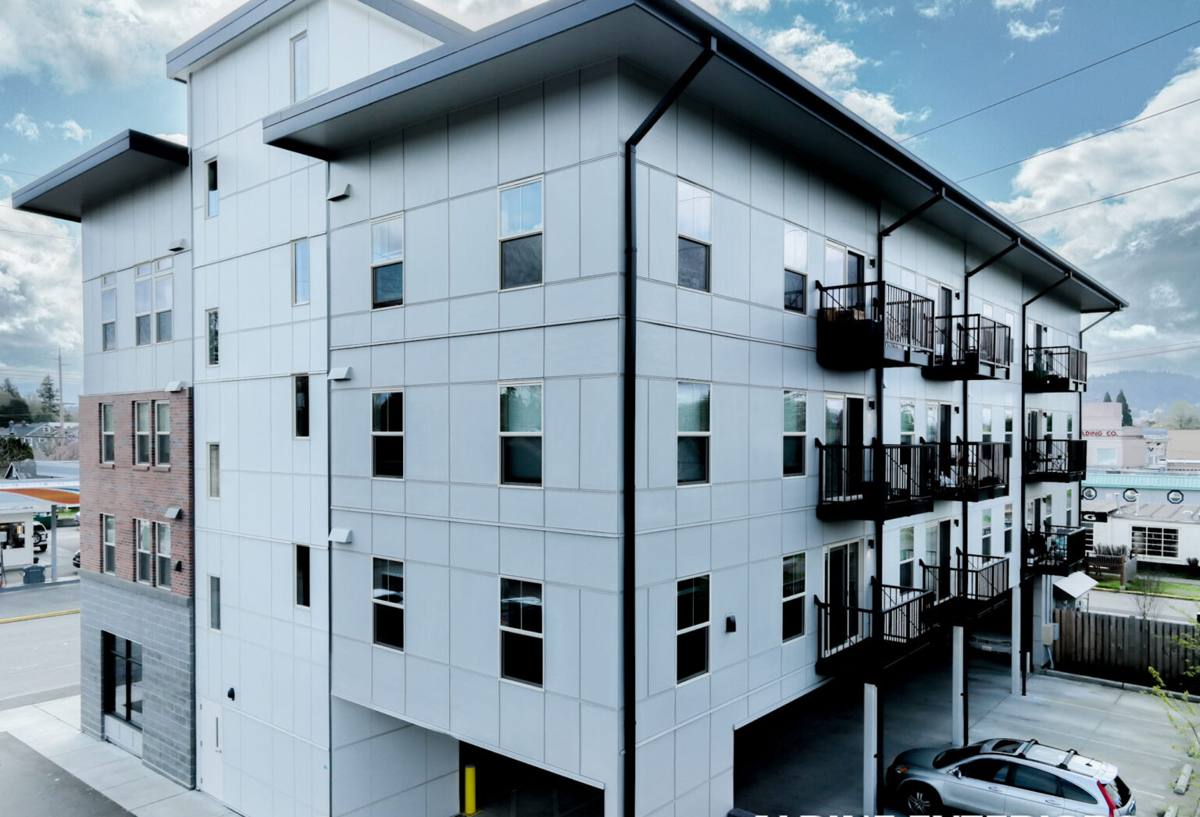
 Bellingham Exterior
 Why York's Climate Is Hard on Siding
Homes in York sit close enough to Bellingham Bay and the Salish Sea that salt-laden air is a constant, year-round factor in how exterior materials age. Add in the driving, wind-pushed rain that comes through Whatcom County in the fall and winter, and a siding product gets tested from two directions at once: airborne moisture and salt working into seams and fasteners, and wind-driven rain finding any gap in flashing or caulking. Then there's moss. Bellingham's long, mild, wet stretches from October through April create ideal growing conditions on north-facing walls, under eaves, and anywhere siding stays shaded and damp for weeks at a time. None of this is unique to York, but it's more concentrated here than in drier inland parts of the state, and it's exactly the kind of exposure that separates siding materials that hold up from ones that quietly fail from the inside out.
What This Means in Practice
A siding product that performs fine in Spokane or Yakima can struggle in a Whatcom County marine climate. Wood-based products swell and contract with moisture cycles. Some engineered wood products are more sensitive to sustained damp exposure at cut edges and butt joints than manufacturers' marketing suggests. Vinyl doesn't rot, but it doesn't stop moss and mildew from taking hold on its surface, and it can warp or fade under years of UV and temperature swings near the water. For York homeowners, the material choice matters as much as the installation.
What We See on York Homes
York is one of Bellingham's older, established residential neighborhoods, with a mix of home ages and siding histories — some houses on original wood siding, some on aging vinyl, some on siding that was already replaced once and is showing its age again. What's common across most of them is decades of exposure to the same salt air and rain patterns described above. When we're called out for an estimate in York, we're usually looking at one of three situations: siding that's visibly failing (cracking, buckling, soft spots), siding that's structurally fine but has lost its finish and curb appeal, or a full exterior remodel where the homeowner wants to fix moisture problems for good instead of patching them again in five years.
Why We Only Install James Hardie Fiber Cement
This company installs one siding product: James Hardie fiber cement. We don't install vinyl, LP SmartSide, Cemplank, Allura, primed spruce, or cedar, and that's a deliberate standard, not a lack of options.
Vinyl is inexpensive and low-maintenance in the sense that it doesn't need painting, but it's a thin plastic product that can crack in impact, deform in heat, and fade unevenly over time — and it does nothing to resist the moss and mildew that thrive in this climate. Cedar and primed spruce are genuinely attractive materials, and we respect the craft behind wood siding, but real wood in a marine climate demands a maintenance schedule most homeowners underestimate: regular refinishing, vigilant caulk and paint upkeep, and constant vigilance against moisture intrusion at end grain and joints. LP SmartSide and other engineered wood-strand products have improved over the years, but they're still wood-based composites, and their long-term performance depends heavily on installation precision and ongoing maintenance in exactly the wet conditions York deals with. Cemplank and Allura are themselves fiber cement products, and reasonable alternatives exist in that category — but we've standardized on one manufacturer so we can guarantee consistent material behavior, warranty terms, and installation detailing on every job, rather than juggling multiple product specs and vetting new products as they come and go.
James Hardie fiber cement is a mix of cement, sand, and cellulose fiber, fired and cured into a rigid, non-combustible board. It doesn't rot, it doesn't feed insects, and it holds paint and factory finish far longer than wood-based alternatives in a wet, salty climate. That combination — durability, fire resistance, and a finish that's engineered for this kind of weather — is why we put it on every home we side, in York and everywhere else we work.
Hardie Product Lines Built for This Climate
James Hardie engineers its siding for specific climate zones, and homes in Whatcom County fall into the manufacturer's HZ5 zone, formulated for regions with significant moisture and freeze-thaw cycling. That's not a marketing detail — it affects the board's moisture resistance and how it's engineered to perform over decades of exposure like what York homes get off the bay.
- HardiePlank lap siding — the most common choice for traditional and updated home styles, available in multiple textures including smooth and cedar-grain finishes.
- HardiePanel vertical siding — used for board-and-batten looks or as an accent alongside lap siding.
- HardieTrim — matching trim boards for corners, window and door surrounds, and fascia, so the whole exterior system is fiber cement rather than mixing in wood trim that ages differently.
- ColorPlus Technology — a factory-applied finish, baked on and cured under controlled conditions, that resists fading and chipping far better than field-applied paint and carries its own finish warranty.
Factory finish matters more here than it might in a drier climate. Field-applied paint on any siding material is only as good as the weather conditions it was applied in and the maintenance it gets afterward. A factory-cured finish removes that variable and gives York homeowners a more consistent, longer-lasting result.
What a Correct Installation Actually Involves
Fiber cement siding is only as good as the installation behind it. The board itself resists moisture, but the seams, flashing, and fastening are what actually keep water out of the wall assembly — and in a climate that delivers sustained wind-driven rain, those details are where jobs succeed or fail.
A correct installation includes a properly prepared water-resistive barrier and drainage plane behind the siding, correctly lapped and sealed housewrap, and flashing installed above every window, door, and horizontal trim transition so water is directed out and away from the wall rather than behind the siding. Fasteners need to be the right type and spacing per Hardie's installation guide, driven correctly so they don't crack the board or leave gaps that let moisture in. Boards need proper clearance from grade, roof lines, and decks — a common shortcut we see on older installations is siding run too close to the ground or a roof surface, which traps moisture against the bottom edge of the board. Butt joints and trim intersections need to be caulked with a product rated for the application, not just whatever's on hand.
Why This Matters More in York
Get these details wrong anywhere and you'll eventually have a problem. Get them wrong on a home taking direct salt air and driving rain off Bellingham Bay, and the timeline to failure shortens considerably. This is the core argument for hiring a crew with real experience installing in this specific environment rather than a general contractor doing a handful of siding jobs a year.
Comparing Siding Materials in a Whatcom County Marine Climate
| Factor | James Hardie Fiber Cement | Vinyl | Cedar / Wood | Engineered Wood (LP SmartSide) |
|---|---|---|---|---|
| Moisture resistance | Strong — cement-based, doesn't rot | Doesn't rot, but traps moisture behind panels if installed poorly | Vulnerable without diligent maintenance | Improved over older wood products, still moisture-sensitive at cut edges |
| Salt air / coastal exposure | Engineered for HZ5 marine zones | Can chalk, fade, and become brittle over time | Finish breaks down faster near salt air | Requires consistent sealing and maintenance |
| Moss and mildew resistance | Doesn't feed organic growth; surface can be cleaned | Growth sits on surface, harder to keep clean long-term | Wood surface can support growth if damp | Comparable moisture concerns to other wood-based products |
| Fire resistance | Non-combustible | Combustible, can melt/deform near heat | Combustible | Combustible |
| Finish longevity | Factory ColorPlus finish, long warranty | Color molded in but fades unevenly, not repaintable easily | Needs repainting/staining on a recurring cycle | Needs a repaint/maintenance cycle |
| Typical maintenance | Occasional wash; no repainting for many years | Low, but limited repair options if damaged | Regular refinishing and caulk upkeep | Regular inspection and finish maintenance |
Our Process for a York Siding Project
We start with an on-site assessment of the existing siding, sheathing, and any problem areas — soft spots, past water intrusion, trim condition — so the estimate reflects what's actually behind the current siding, not just what's visible on the surface. From there, we walk the homeowner through material and color options, including the HardiePlank textures and ColorPlus palette, and provide a written scope before any work begins.
Once a project starts, we remove the old siding down to the sheathing so we can inspect and address anything hidden underneath — this is often where we find moisture damage from a prior installation's flashing or caulking shortcuts. We install or repair the water-resistive barrier, correct any flashing details around windows, doors, and roof transitions, then install the Hardie siding and trim to the manufacturer's specifications for fastening, clearance, and sealant. A final walkthrough with the homeowner closes out the job, covering care instructions and warranty documentation.
What to Look For in a Siding Contractor
Not every crew that offers siding work has real experience with fiber cement or with the specific conditions along Bellingham Bay. Here's what's worth asking about before you hire anyone for a project in York or elsewhere in Whatcom County:
- Do they install fiber cement regularly, or is it an occasional add-on to other siding types?
- Will they remove old siding fully rather than siding over it, so hidden moisture damage can be found and fixed?
- Do they follow the manufacturer's written installation guide for fastening, clearances, and flashing — and can they explain those details clearly?
- Is the flashing detail at windows, doors, and roof lines part of the written scope, not an assumption?
- Do they carry manufacturer certification or training specific to the product they're installing?
- Are warranty terms — both material and workmanship — explained in writing before work starts?
Living With Hardie Siding in York's Climate
One advantage of a correctly installed Hardie exterior is how little upkeep it asks for compared to wood or field-painted alternatives. It still benefits from periodic attention in this climate: an occasional gentle wash removes surface moss and grime before it has a chance to build up, especially on shaded, north-facing walls where Bellingham's long damp season gives organic growth the most time to take hold. Keeping gutters clear and vegetation trimmed back from the siding helps reduce the sustained dampness that feeds moss growth in the first place. Because the ColorPlus finish is factory-applied and warrantied, homeowners aren't stuck on a repainting cycle the way they would be with wood siding — but it's still worth a visual check each year, particularly after a rough winter, to confirm caulking and trim joints are holding up.
Why Local Experience in York Matters
Siding that's engineered correctly on paper still depends on a crew that understands how Bellingham's weather actually behaves against a wall — where wind-driven rain hits hardest, which sides of a house hold moss longest, and how salt air changes maintenance expectations over a decade, not just a season. A contractor who works in York and the surrounding Bellingham neighborhoods regularly has already seen how different installations from the past have held up or failed in this specific environment, and builds that knowledge into every flashing detail and fastening decision on the next job.
If you're weighing a siding replacement or repair in York, we're glad to take a look and give you a straight, no-pressure assessment of what your home actually needs. Use the form below to request a free estimate.